Hey everyone, it’s Jake here from the band saw machine crew – the go-to spot for anyone who actually needs equipment that doesn’t quit mid-job. Lately, I’ve been getting so many calls from guys (and gals!) panicking because their band saw blades are snapping out of nowhere. Like, mid-cut, sending shrapnel flying, ruining their workpiece, and leaving them stuck with a messy repair bill. Total headache, right? I get it – when you’re in the middle of a big project, the last thing you need is a broken blade holding you up. So I’m breaking down exactly how to prevent blade breakage on a band saw machine, no fancy jargon, just real tips from people who use these things every single day. Band Saw Machine

First off, let’s cut to the chase: blade breakage isn’t random. I’ve seen it a hundred times, and 9 times out of 10, it’s from something small and avoidable that someone either overlooks or just doesn’t know about. Let’s start with the most obvious (but most messed up) culprit: using the wrong blade for the job. I can’t tell you how many times a customer calls saying their 1/2-inch bi-metal blade snapped while cutting 12-inch solid steel, like what did you expect? Blades aren’t one-size-fits-all. Let’s break this down quick: if you’re cutting thin stuff – like aluminum sheet or PVC pipe – you need a fine-tooth blade (like 18-24 TPI, teeth per inch). Too few teeth, and they’re trying to grab way too much material at once, which tugs and snaps the blade. If you’re cutting thick steel, structural lumber, or something dense, you need fewer teeth (3-10 TPI) so each tooth has room to bite without overworking. Also, pay attention to blade material. Bi-metal blades are great for general use – steel, aluminum, even some wood with nails – but if you’re cutting super hard stuff like stainless steel or Inconel, you need a carbide-tipped blade. They cost a little more upfront, but I promise they don’t snap like cheap bi-metal when you’re pushing hard. And never mix blade types! If you swap from wood to metal, change the blade. I’ve seen a guy try to cut a metal bolt with a wood blade, and it didn’t just break – it sent a tooth flying into his workshop wall. Scary stuff.
Next up: blade tension. This is such a big one, and so many guys skip checking this. Think of blade tension like tightening a guitar string – too loose, and it wiggles, skips teeth, and snaps; too tight, and it stretches so much it’s brittle and breaks under the slightest bump. Every band saw machine has a tension gauge (most of our units have a digital one that’s super easy to read, by the way) – don’t guess. Follow the manufacturer’s specs for your blade size and material. For example, a 10-foot, 1-inch bi-metal blade for cutting steel usually needs around 20,000 PSI of tension, but that number drops a bit for thinner blades. I always tell customers to check tension every time they change a blade, and even halfway through a big job if they’re pushing the machine hard. Also, don’t just crank the tension to the max to “fix” a wobbly blade – that’s a quick ticket to a break. I had a regular customer last month who did that, and he snapped three blades in one day before he called me. Turned out his blade guide was worn, not the tension. Oops.
Blade guides and bearings – these little parts are unsung heroes, and if they’re worn out, they’ll murder blades. Blade guides keep the blade straight as it cuts, and bearings help it move smooth without wobbling. If your guides are worn, there’s play in the blade, so every cut is off-center, and the blade gets twisted, leading to stress cracks and eventually breakage. The same goes for the guide arms – if they’re not aligned right, the blade’s not tracking straight. How do you check this? Turn off the machine, unplug it, and run your finger along the blade while it’s off. If you feel any rough spots or side-to-side movement, the guides or bearings are shot. Most guides are adjustable – just loosen the lock, set them so they’re barely touching the blade (not squeezing tight!), and lock them back. If they’re plastic guides, they’ll wear out faster if you’re cutting a lot of abrasive materials, so swap them for UHMW or metal guides if you’re running heavy. Our band saw machines come with high-quality adjustable guides, so you guys don’t have to mess around with cheap parts that wear out in a week.
Speaking of tracking – that’s the next thing. Blade tracking is different from tension; it’s making sure the blade stays centered on the two drive wheels. If the blade is riding off the edge of the wheel, it’s going to slip, get pulled sideways, and snap. Most band saw machines have a tracking adjustment knob, usually on the top wheel. To adjust it, turn the machine on, let the blade run at idle speed, and twist the knob until the blade is dead center on the wheels. If it’s sliding to one side, tweak the knob slowly until it straightens out. Don’t overdo it – tiny adjustments go a long way. I’ve seen guys yank the tracking knob so hard the wheel shifts, and that’s a whole other problem. Also, keep those wheels clean! Sawdust, metal shavings, and grease build up on the wheels, making the blade slip more. Wipe them down with a rag every few jobs, especially if you’re cutting dirty or dusty materials.
Now, cutting speed and feed rate – I call this “playing nice with the blade.” If you’re cranking the feed lever all the way forward and yanking the work through the blade as fast as you can, that’s like making someone run a marathon in 5 minutes. The blade can’t keep up, it overheats, and the teeth snap off or the whole blade breaks. Same with speed: too fast for the material, and you’re overworking the teeth; too slow, and you’re rubbing the blade instead of cutting, which wears it out from friction. For metal, you want a slower speed – 50-150 SFM (surface feet per minute) depending on the material. Steel is around 80-100 SFM, aluminum is a bit faster, 100-120 SFM. For wood or plastic, you can go faster, like 200-300 SFM. Most of our band saw machines have variable speed, so you can tweak it on the fly. The feed rate should be steady – not too fast, not too slow. If you notice sparks flying or the blade getting super hot to the touch, you’re going too fast. Pull back the feed a little, let the blade breathe. I had a carpenter friend who was cutting 10 4x4s in a row, cranking the feed, and he broke two blades. Once he slowed down, the blades lasted twice as long. Makes sense, right?
Another thing: material prep. That old rule “measure twice, cut once” isn’t just for woodworking – it applies here too. If your workpiece is warped, has nails, screws, or debris embedded in it, that’s gonna mess up the blade. Warped material will twist the blade as you cut, putting uneven stress on it. Remove all nails, screws, and staples before you cut metal or wood – even a small nail can catch a blade tooth and snap it. Also, support the workpiece properly! If you’re cutting a long piece of steel, don’t just hang half of it over the table. It’ll wiggle, pull the blade, and cause breaks. Use rollers or extra clamps to support the entire length of the material, so it stays straight as it cuts. I see this all the time – guys cut a 10-foot pipe on a small band saw, half hanging off, and wonder why the blade snaps. Don’t be that guy.
Heat and lubrication – this is huge for metal cutting, and a lot of people skip it, thinking “it’s just a saw, it doesn’t need oil.” Wrong! Metal cuts create a ton of friction, which heats up the blade, makes the metal soft, and wears the teeth down fast, leading to breakage. For metal cutting, use a cutting fluid or lubricant – it cools the blade, flushes out metal shavings, and reduces friction. If you’re cutting steel, a general-purpose cutting fluid works. For stainless or super-hard metal, use a synthetic or semi-synthetic fluid that’s made for high-temp cutting. You don’t need to douse the blade, just a steady stream so it hits the cutting edge. If you don’t want to deal with liquid, we sell dry cutting blades that work for some metals, but they don’t last as long as lubricated ones. For wood or plastic, you don’t need lubricant, but keeping the blade free of sawdust is still important – sawdust builds up between the teeth, makes them drag, and weakens the blade.
Wait, what about blade storage and installation? I almost forgot that, because even a new blade can snap if you install it wrong. When you get a new blade, don’t bend it, don’t drop it on a concrete floor – those small bends and dents are stress points that will turn into breaks later. When installing a blade, make sure the ends are welded properly (no gaps, no weak spots) and that you’re threading it correctly through the guides. Don’t pull it too tight during installation, just enough to hold it. After installing, run the blade for a minute or two at idle to make sure it’s tracking right before you start cutting. Also, don’t reuse blades that have already been bent or have missing teeth – I’ve seen guys try to “fix” a slightly bent blade by bending it back, and that breaks 10 minutes into the first cut.
Let’s talk about common mistakes I see all the time, to wrap this up. A customer last week named Mike called me, super frustrated, saying his new band saw blades were snapping every job. I asked him what he was doing, and he told me he was using 10 TPI blades for cutting thin aluminum sheet. Oh! That’s exactly the wrong TPI. Too few teeth, each tooth was taking a huge chunk of aluminum, so the blade couldn’t handle the load. I told him to swap to 18 TPI, and two weeks later he texted me saying he hasn’t had a break since. Another guy, Dave, was running his blade so loose it was wiggling, and he thought that was normal. Once he adjusted the tension to spec, his blades lasted 3 times longer.
Look, band saw blade breakage doesn’t have to be a pain in the neck. It’s all about matching the blade to the material, keeping your machine adjusted right, not overworking the blade, and doing the small maintenance checks everyone skips. Our band saw machines are built to handle heavy use, but they only work as good as how you take care of them and how you set them up for the job.
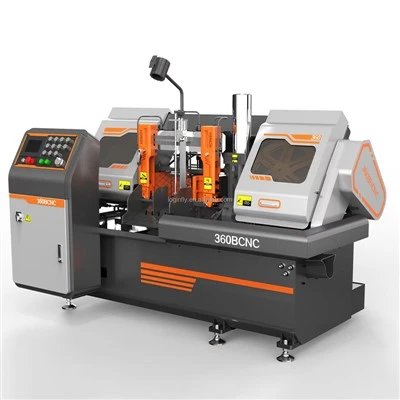
If you’re dealing with constant blade breakage, or if you need a new band saw machine that’s built to last (and cuts down on those annoying breaks), hit us up. We’ve got all the blades, parts, and tips you need to keep your projects running smooth. No hassle, just real advice from people who get it.
Automatic Band Saw References:
- American Saw & Manufacturing Association. (2021). "Band Saw Blade Tension and Tracking Best Practices"
- Machinery’s Handbook. (31st Edition). Industrial Press, Inc.
- Woodworking Network. (2022). "Preventing Band Saw Blade Failures in Metal and Wood Cutting Applications"
- Carbide Processors, Inc. (2020). "Blade Material Selection for High-Strength Metal Cutting"
Shanghai Loginfly Sawing Technology Co., Ltd.
As one of the most professional band saw machine manufacturers and suppliers in China, our products have good reputation in the market. We warmly welcome you to wholesale premium band saw machine from our factory. If you have any enquiry about cooperation, please feel free to email us.
Address: Room 506 NO.655 Yinxiang Road,Nanxiangtown,Jiading District, Shanghai.China
E-mail: sales01@loginfly.com
WebSite: https://www.loginflysaws.com/
