Hey, let’s cut to the chase—if you’re reading this, chances are you’re either a production manager tired of chasing operators for a three station thermoforming machine, a plant owner staring at rising scrap rates, or someone just starting to dip their toes into thermoforming automation. And you’re probably asking the exact question that’s been popping up in my DMs, our service calls, and even at trade show coffee runs: Can I actually automate a three station thermoforming machine? Three Station Thermoforming Machine
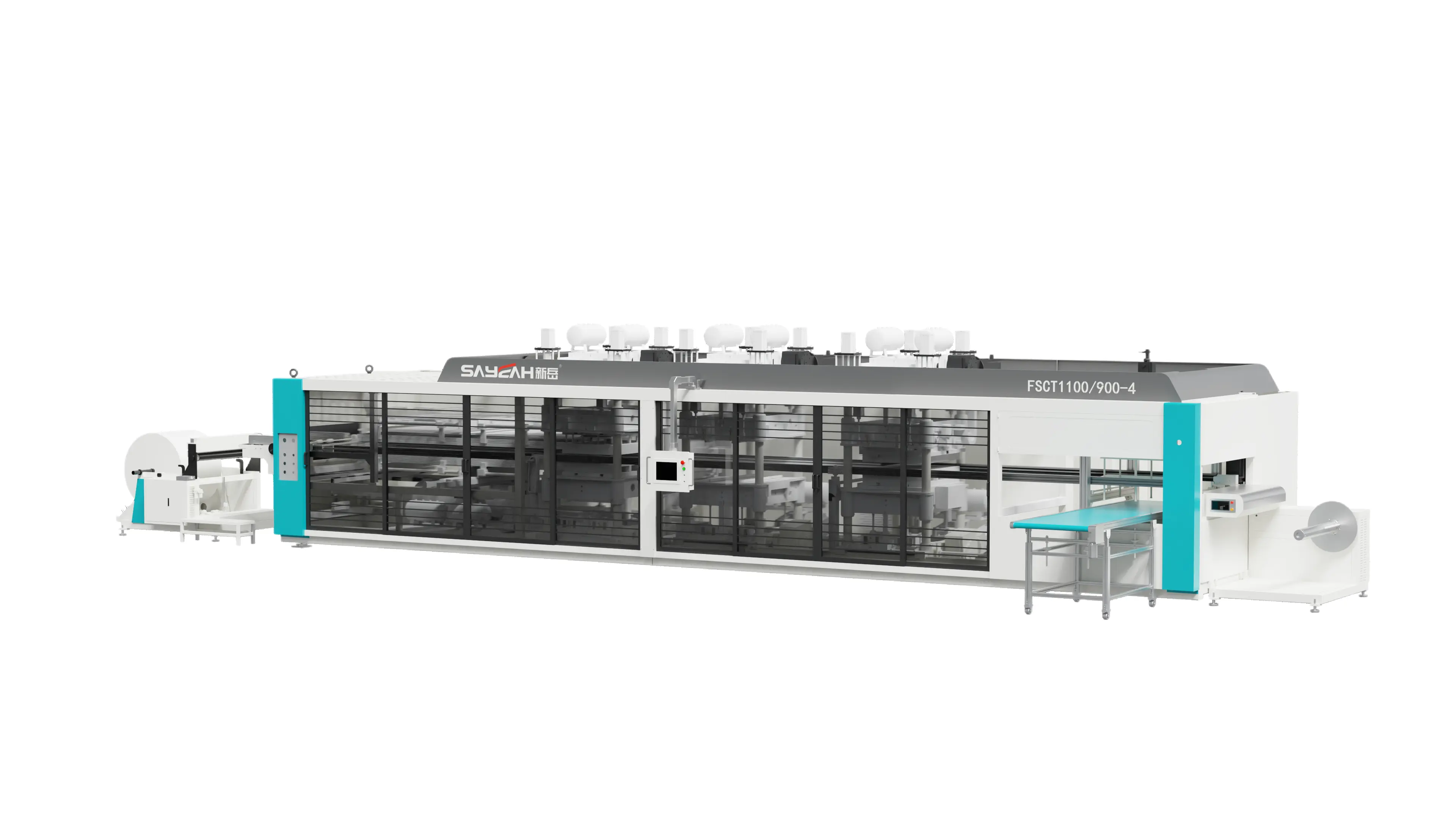
First, let’s get one thing straight—three station thermoforming isn’t the big, clunky industrial line you see making car bumpers. It’s the smaller, more flexible workhorse for things like disposable packaging, medical trays, or even simple toy parts. Right now, a lot of these machines still run manual or semi-automatic: operator loads the sheet, triggers the forming, waits for the cut, unloads the part, repeats. That works when you’re running 500 parts a day, but push that to 5,000, and suddenly you’ve got fatigue-related errors, scrap that eats into margins, and turnover that’s costing you more than you think. So yeah, automation isn’t just a nice-to-have here—it’s doable, and it pays for itself faster than you might realize.
Let’s break down the gap people forget first. The three station’s core design is modular, which is why it’s so popular for small to mid-batch runs. Traditional automation often gets marketed for full, 10-station lines that run 24/7, but those are overkill if your production isn’t that consistent. For three station machines, we’re talking about retrofitting or adding targeted automation, not replacing the whole rig. That’s the sweet spot for most shops. I’ve had a customer in medical packaging do this last year: they had a manual three station that was only hitting 70% uptime because their lead operator took a two-week vacation and the temp couldn’t keep up with cycle timing. They added a pick-and-place robot (super common in this space) and auto sheet feeders, and now they’re at 92% uptime, with scrap dropping from 8% to 2%. That’s not a fluke—it’s the data we see across 20+ installs we’ve done in the last two years.
Wait, but let’s address the myths, because there are so many wrong ones out there. First myth: Automation will break your three station’s flexibility. No, that’s only if you get a one-size-fits-all system. The right automation for three stations is modular, so you can switch back to manual if you need a small batch of a custom part. Our most popular retrofit package lets you toggle between auto and semi-auto in 15 minutes—no tools, no downtime. Another myth: It’s too expensive for a small shop. Let’s do quick math: A manual three station has labor costs of ~$18/hour per operator. If you run two shifts, that’s $28,800 a quarter. Add automation costs (let’s be real, a basic pick-and-place + auto feed is $12k-$18k, way less than a new machine) and you’re covering that cost in 3-6 months. We’ve got a food packaging customer that turned a $15k automation investment into $32k in extra profit in 4 months from lower scrap and no overtime pay. That’s hard numbers, not hype.
Now, let’s get into what actually makes a three station machine automatable, because not all are equal. The first check: Is your machine’s control system up to snuff? Old, analog three stations (pre-2010, maybe?) can be harder to automate because they don’t have the digital I/O ports or programmable logic controller (PLC) to talk to automation hardware. But here’s the thing—we can upgrade that PLC for most mid-age machines for a fraction of the cost of a whole new unit. We did that for a customer in Ohio last year who had a 2008 model; instead of buying a new machine, they spent $4k on a PLC upgrade plus $10k on a pick-and-place, and saved $50k vs. a new machine. That’s a no-brainer.
Next, cycle time compatibility. Three stations run cycle times between 10 and 30 seconds, right? Automation hardware (robots, feeders, cutters) is built to match that, but you don’t want to overcomplicate it. For example, if you’re making thin plastic food packaging, a simple 2-axis pick-and-place is all you need. If you’re making deeper medical trays that need precise placement, you might need a 4-axis robot with vision guidance to make sure no part is misaligned. Vision systems are another add-on that’s not as scary as it sounds—they’re just cameras that check for defects before the part gets cut, which cuts scrap even more. Our vision add-on takes 20 minutes to calibrate, and it catches 99% of alignment errors that operators would miss.
Wait, what about handling different materials? A lot of people worry that automation won’t work for PET, PP, or even biodegradable materials. But modern auto sheet feeders are adjustable—they can handle different sheet thicknesses (from 0.2mm to 2mm, the sweet spot for three stations) and even flexible materials for blister packaging. We tested a biodegradable PLA sheet feed last month, and the feeder adjusted automatically in 2 cycles, no tweaks needed. It’s not magic, it’s just hardware built to adapt to what three stations are actually used for, not the big lines.
Now, let’s talk about the roadblocks people actually face, because I don’t want to sell you something that’s not a fit. The biggest one is production variability. If your shop runs 10 different part types a week, with runs as small as 500 parts, automation is still worth it—you just need a system that can switch recipes quickly. Our retrofit packages let you save up to 50 different part recipes, so you can load a new sheet size, adjust the pick-and-place position, and go in 2 minutes. The other roadblock is downtime fear. A lot of small operators think if they automate, something will break and they’ll be stuck without a machine. But we build our automation with modular components, so replacing a feeder part or a robot gripper takes 10 minutes, and we have 24/7 remote support for all our installations. Last year, one customer had a gripper fail on a Saturday; our tech walked them through swapping it over the phone, and they were back running in 12 minutes. No emergency service call, no lost production.
Wait, should you just buy a new automated three station, or retrofit your old one? That’s the question we get most. If your machine is less than 10 years old, good condition, and runs 80% of the time, retrofit is almost always better. If it’s older, has constant maintenance issues, or you want a machine with built-in safety features (OSHA has tight rules for thermoforming now, right?), a new automated model might make more sense. We’ve had customers do both: one upgraded their 2012 machine, another bought a new automated unit for their night shift. The key is matching the automation to your actual production, not a generic “automate everything” pitch.
Let’s wrap this up with a real example, not a case study I pulled off a website. A friend runs a small thermoforming shop in North Carolina, does custom packaging for craft breweries and CBD brands. He had two manual three stations, ran two operators per shift, scrap was 10%, and turnover was so high he was hiring a new operator every 6 months. Last year, he added a pick-and-place robot to one machine, upgraded its PLC, and now he runs that machine unattended for his mid-sized batches, and the manual machine for small, custom runs. He told me last month that his labor costs are down 35%, scrap is at 4%, and he’s been able to take on two more clients because he has more uptime. That’s exactly what automation is for three stations—not replacing the flexibility, but boosting the reliability and margins so you can grow.
So back to your original question: Can I automate a three station thermoforming machine? The short answer is yes—if you pick the right automation for your machine, your production volume, and your part types. You don’t need a $100k full line; you just need a modular system that fits the three station’s strengths: flexibility, quick changeovers, and suitability for mid-batch runs. It’s not a “set it and forget it” thing, but it’s way easier and cheaper than most shops realize.

If you’re tired of chasing labor, dealing with avoidable scrap, or missing out on orders because your production line is slow, let’s talk. We don’t push one-size-fits-all automation; we look at your specific machine, your runs, and your goals to put together a plan that works for you. No jargon, no overpriced add-ons, just solutions that actually make sense for a three station.
Four Station Thermoforming Machine Reference
- Thermoforming Automation Association. (2023). Modular Automation Solutions for Mid-Batch Thermoforming.
- National Institute for Occupational Safety and Health. (2022). Labor Cost and Scrap Rate Reductions in Semi-Automatic Thermoforming Operations.
- Society of Plastics Engineers. (2021). Retrofit vs. New Automation for Small-to-Medium Thermoforming Machines.
Zhejiang Sayeah Machinery Co., Ltd.
Zhejiang Sayeah Machinery Co., Ltd. is one of the most reliable manufacturers and suppliers of three station thermoforming machine in China, also supports high quality customized service. Please feel free to buy CE approved three station thermoforming machine from our factory. For price consultation, contact us.
Address: Wanquan District Industrial Zone,West Of China National Highway 104, Sunlou Village, Wanquan Town, Pingyang County, Zhejiang Province. China
E-mail: sales@sayeahmachinery.com
WebSite: https://www.sayeahthermoforming.com/
