Hey there! As a supplier of Transformer Testers, I often get asked about how these nifty devices measure insulation resistance. So, I thought I’d take some time to spill the beans and give you a breakdown of the whole process. Transformer Tester
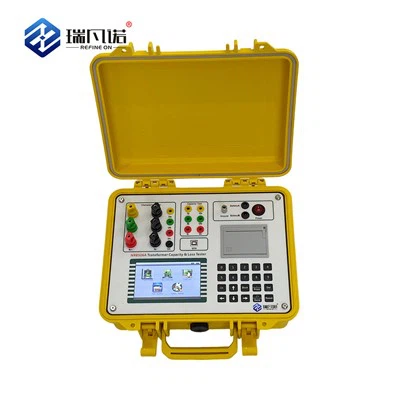
First off, let’s talk about why measuring insulation resistance in transformers is such a big deal. The insulation in a transformer plays a crucial role in keeping the electrical current flowing where it’s supposed to and preventing any unwanted leakage. Over time, though, this insulation can degrade due to factors like heat, moisture, and mechanical stress. By regularly measuring the insulation resistance, we can catch any early signs of degradation and take steps to prevent major issues down the line.
So, how does a Transformer Tester actually measure insulation resistance? Well, it all boils down to the basic principle of applying a known voltage to the insulation and then measuring the resulting current. From there, we can use Ohm’s Law (V = IR) to calculate the resistance.
Most Transformer Testers use a technique called the "megger test." A megger is a device that generates a high DC voltage, typically in the range of 500 to 5000 volts. This high voltage is applied across the insulation for a specific period, usually around one minute. During this time, the tester measures the current flowing through the insulation.
Let’s break down the steps involved in a typical megger test using a Transformer Tester:
Step 1: Preparation
Before we start the test, we need to make sure the transformer is completely de – energized. This means disconnecting it from the power source and ensuring that all the associated electrical circuits are also turned off. We also need to clean the terminals and any accessible parts of the insulation to remove any dirt, dust, or moisture that could affect the test results.
Step 2: Connecting the Tester
Once the transformer is ready, we connect the Transformer Tester to the appropriate points on the transformer. Usually, we connect one lead to the winding conductor and the other lead to the transformer’s grounded metal enclosure. This setup allows us to measure the resistance between the winding and the ground, which is a key indicator of the insulation’s health.
Step 3: Applying the Voltage
After the connections are secure, we turn on the Transformer Tester and set it to the appropriate test voltage. The tester then starts applying the high DC voltage across the insulation. As the voltage is applied, the insulation will start to conduct a small amount of current. This current is called the "leakage current," and it’s what we’re interested in measuring.
Step 4: Measuring the Current and Calculating Resistance
The Transformer Tester continuously monitors the leakage current during the test period. Once the one – minute test time is up, the tester uses the measured voltage and current values to calculate the insulation resistance. The formula, as I mentioned earlier, is R = V / I, where R is the resistance, V is the applied voltage, and I is the measured current.
Step 5: Interpreting the Results
The calculated insulation resistance value gives us a good idea of the insulation’s condition. Generally, a high insulation resistance value indicates that the insulation is in good condition, while a low value suggests that there may be some degradation or damage.
Industry standards provide some guidelines on what constitutes a "good" insulation resistance value. For example, for a transformer rated at 1000 volts or less, an insulation resistance of at least 1 megohm is often considered acceptable. However, these values can vary depending on factors such as the transformer’s age, size, and operating environment.
Now, there are a few things to keep in mind when using a Transformer Tester to measure insulation resistance.
One important factor is temperature. The insulation resistance of a transformer can change significantly with temperature. As a general rule, the resistance decreases as the temperature increases. So, when comparing test results, it’s crucial to take into account the temperature at which the test was conducted. Some advanced Transformer Testers can even automatically correct the measured resistance value for temperature, making it easier to get an accurate assessment of the insulation’s condition.
Another thing to consider is the presence of moisture. Moisture can have a big impact on insulation resistance, causing it to drop significantly. If there’s any suspicion of moisture in the transformer, it’s a good idea to dry it out before conducting the test to get more reliable results.
Also, it’s important to note that a single insulation resistance measurement may not tell the whole story. It’s often a good idea to perform regular tests over time and track the changes in resistance. A gradual decrease in resistance over several tests can be a sign of ongoing insulation degradation, even if the current value is still within the acceptable range.
As a Transformer Tester supplier, I’ve seen firsthand how these devices can be a game – changer for maintenance teams. By providing accurate and reliable insulation resistance measurements, our testers help identify potential issues early, saving time and money in the long run.
Whether you’re a small electrical contractor looking to perform basic maintenance on transformers or a large utility company managing a fleet of high – voltage transformers, having a quality Transformer Tester in your toolkit is essential. Our testers are designed to be user – friendly, with intuitive interfaces and clear instructions. They’re also built to last, with rugged construction that can withstand the rigors of field use.
If you’re in the market for a Transformer Tester, or if you have any questions about how our products can help you measure insulation resistance, don’t hesitate to reach out. We’re here to help you find the right solution for your needs. Whether it’s choosing the right model for your specific application or getting advice on how to interpret test results, our team of experts is just a message away.

In conclusion, measuring insulation resistance is a critical part of transformer maintenance, and a Transformer Tester is the key tool for getting the job done. By understanding how these testers work and what factors can affect the results, you can ensure that your transformers are operating safely and efficiently.
Hipot Tester Contact us today to start the conversation about how our Transformer Testers can benefit your business.
References
- Electrical Equipment Maintenance Handbook
- Transformer Testing and Maintenance Guidelines published by industry associations
Refine On (Hebei) Electric Power Technology Co., Ltd.
Refine On (Hebei) Electric Power Technology Co., Ltd. is one of the most reliable transformer tester manufacturers and suppliers in China, also supports customized service. Please feel free to wholesale advanced transformer tester at competitive price from our factory. Contact us for quotation.
Address: Building 13, Liandong U Valley, No.64, Jing SAN South Street, Economic Development Zone, Mancheng District, Baoding City, China
E-mail: victor@transformer-test.com
WebSite: https://www.transformer-test.com/
