Hey everyone, and welcome back to the blog! As someone who’s been in the industrial cable tray game for over a decade—spent years talking to plant managers, electricians, and procurement guys who’ve learned the hard way that picking the wrong tray type turns into a headache later—I’m stoked to break down one of the most common questions I get weekly: what’s actually different between indoor and outdoor industrial cable trays? No fluff, no overly technical jargon, just real talk from someone who’s sold these things, fixed the mistakes, and knows what works when. Industrial Cable Tray
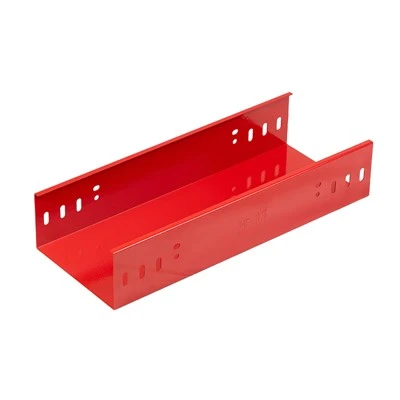
Let’s cut to the chase first: it’s not just about “one goes inside, one goes outside.” I’ve seen guys try to use an indoor tray outside and have it rust through in 18 months (way before its warranty even ends) and vice versa—an outdoor tray that’s way too bulky and overkill for a cramped warehouse closet, wasting cash they could’ve used for other gear. So let’s break this down by the real stuff that matters, not just the marketing labels.
First up: Material. This is the big one that trips most people up. Indoor trays? You can get away with cheaper materials because the environment is controlled—no constant rain, sun, or salt spray. 90% of the indoor trays I sell are either galvanized steel (wait, not the same as outdoor galvanized—hold that thought) or even aluminum for light loads. Aluminum’s great for indoor spaces because it’s lightweight, easy to cut to size on-site, and doesn’t scratch super easily. Galvanized indoor trays are usually what’s called “standard galvanneal” or “mild steel with a thin zinc coating”—enough to handle dust, minor spills, and indoor humidity, not extreme outdoor elements. The key here is: indoor materials prioritize cost and ease of installation, not long-term weather resistance.
Outdoor trays? They need to stand up to the elements, so materials get beefier and treated better. The go-to here is “hot-dip galvanized steel”—not the thin dip you get with indoor stuff. Hot-dip means you dunk the steel in molten zinc, so the coating is thick, adheres tight, and won’t flake off when you’re drilling holes or dragging it across concrete. I also sell a ton of stainless steel outdoor trays, usually 304 or 316 grade, for places near coasts or industrial plants that have chemical fumes (like refineries or food processing plants). 316 stainless is even better for salt air, by the way—way more resistant to corrosion than 304. I once had a customer at a coastal power plant try to save a few bucks on 304 and had to replace half the trays within two years; switched to 316 and they haven’t had an issue since. Bottom line on materials: indoor = cheap, functional for controlled spaces; outdoor = corrosion-resistant, heavy-duty, made to fight nature.
Next, Design and Structural Strength. Let’s talk load first, but not just that—how the tray is built to hold that load. Indoor spaces usually have consistent, low to moderate loads. Think office buildings, retail centers, small warehouses, or manufacturing floors where you’re running power and data cables. Indoor trays are often lighter, with shallower sides (like 2” or 3” deep) because you don’t have to deal with wind, snow, or even the extra weight of ice. Their frame is thinner, too—12-gauge steel is common for indoor, since it’s easy to bend and fits through tight ceilings or wall mounts. I’ve had electricians tell me they love indoor aluminum trays because they can carry one up a ladder by themselves, no crew needed.
Outdoor trays? They have to handle way more variables. Wind loads, snow accumulation, ice, even bird droppings (yes, that’s a thing—acidic bird poop eats coatings). So they’re thicker, usually 10-gauge or even 8-gauge steel, with deeper sides (4” to 6”) to hold extra cable weight and keep water from sloshing in during heavy rain. Their structural supports are beefier too—when you mount an outdoor tray to a concrete wall or a steel pole, the brackets are way sturdier than indoor ones, made to handle the lateral force from strong winds. I also design outdoor trays with extra bracing along the middle if they’re spans longer than 10 feet; indoor trays can usually get away with supports every 8 feet, but outdoor might need them every 6 feet to prevent sagging under snow. Oh, and outdoor trays almost always have a raised or closed bottom? Wait, no—some are open, but they have larger drainage holes. Indoor trays might have tiny, almost decorative holes, but outdoor ones need ½” or ¾” diameter holes spaced every 2 feet so water doesn’t pool inside and cause corrosion or cable damage. I once saw an outdoor tray with clogged small holes—pooled rain weighed it down so much it pulled the brackets off the wall. Lesson learned: outdoor drainage is non-negotiable.
Then there’s Environmental Resistance, which is basically the stuff that breaks trays when you ignore it. Indoor environments are pretty mild—unless you’re in a super humid basement or a manufacturing plant with constant chemical spills, but even then, indoor is way more controlled. Indoor trays only need to resist minor dust, oil splatters (from a machine every once in a while), and indoor humidity (like 40-60%). Most indoor galvanized trays will hold up to that for 15+ years no problem, no special coating needed.
Outdoor is a whole other animal. UV radiation from the sun is a big one—regular paint or thin zinc coatings will break down in direct sunlight within a couple years, peeling or chipping. That’s why hot-dip galvanizing is so popular for outdoor, because the thick zinc coating protects the steel from UV for 20+ years. If you’re in a hot, dry climate or near a road with de-icing salt in winter, you need outdoor trays that can resist salt corrosion too—something standard galvanized won’t do. I had a customer in Michigan (super snowy, uses tons of salt) who tried an indoor galvanized tray once—rusted through in 10 months. Switched to a hot-dip galvanized outdoor tray, and it’s now 7 years later, still looks almost new. Also, outdoor trays have to resist extreme temperature changes—from freezing cold in winter to 100+ degrees in summer—so they can’t warp or expand too much. Indoor trays don’t have to deal with that kind of swing, so their material flexibility isn’t a priority.
Installation Considerations, which is something most people don’t think about until it’s too late. Indoor installation is usually straightforward. You’re working in a space that’s climate-controlled, no rain, no wind, so you can use lighter tools, drill holes without worrying about debris getting in, and even use lighter fasteners. Aluminum indoor trays are super easy to cut with a basic circular saw and metal blade—takes 10 minutes to trim a tray to fit around a duct or a support pole. I always tell my indoor customers: don’t overcomplicate it. Pick a tray that fits the space, and you can have it up in a day or two, no extra help needed.
Outdoor installation is way trickier. You have to deal with weather delays—can’t install in heavy rain or lightning, obviously. The trays are heavier, so you might need a second pair of hands or even a small lift to get them up high. Drilling holes in outdoor steel requires special bits because it’s thicker, and you have to make sure those drill holes are coated with a zinc-rich paint right after—because when you drill, you scratch the galvanized coating, and that’s where rust starts. If you skip that step, I guarantee you’ll have a rust spot within a year. Also, outdoor trays need to be mounted with more space—you can’t push them right up against a wall that might hold moisture, or under a roof overhang where water drips consistently. I always leave a 1-inch gap between the tray and the wall for air circulation. Another thing: outdoor cables are usually run longer distances, so tray spans might be bigger, but you need to account for expansion. When steel gets hot, it expands, so an outdoor tray that’s 20 feet long can expand a quarter-inch on a hot summer day. So you have to install expansion joints at regular intervals—something you never, ever need for indoor trays, since temperature changes are minimal.
Wait, let’s add a quick real-world example to make this concrete. Last year, I had a manufacturing customer who was expanding their warehouse. They tried to save $1,200 by buying 100 feet of “industrial cable trays” from a local supply store, thinking it was all the same. Turned out, half the trays were the same indoor galvanized ones. They installed them outdoors along the side of the building to run power to a new loading dock. Six months later, those indoor trays were covered in rust—so bad they had to replace them, costing them $2,500 extra in rush fees and labor. If they’d just asked, I would’ve told them to get hot-dip galvanized outdoor trays for that spot, and saved them the hassle. That’s the kind of mistake I see all the time—cutting corners on the wrong stuff.
Another example: a data center client. They had a cramped server room, so they wanted a lightweight tray that could fit through tight ceiling openings. They went with aluminum indoor trays, which worked perfectly—easy to carry, cut to size, didn’t weigh down the ceiling grid. If they’d used an outdoor stainless steel tray, it would’ve been way too heavy, more expensive, and totally unnecessary for the controlled indoor space.
So to wrap this up, the key takeaways that I tell every customer: 1. If it’s going inside a controlled space (warehouse, office, server room, dry manufacturing floor), indoor trays are cheaper, lighter, and easier to install—no need for overkill. 2. If it’s going outdoors (loading docks, power line runs, coastal areas, exposed plant equipment), you need hot-dip galvanized or stainless steel outdoor trays—they’re built to fight corrosion, wind, sun, and everything Mother Nature throws at them. 3. Don’t skip the small stuff: drainage holes, expansion joints, coating drill holes—those are the details that make a tray last 10 years vs. 2 years.

At the end of the day, I’ve been in this long enough to know that buying the right cable tray isn’t just about checking a box. It’s about avoiding the headaches, the extra costs, and the downtime that comes when a tray fails unexpectedly. If you’re planning a project and aren’t sure which type you need, or you just want to ask about specific specs, reach out—my team and I have helped hundreds of clients pick the right tray, no sales pitch, just real advice based on what works in the field. No pressure, just let us know your project details, and we’ll help you get the right gear for the job.
Stainless Steel Cable Tray References
- National Electrical Manufacturers Association (NEMA). 2020. NEMA VE 1: Requirements for Metal Cable Tray Systems.
- Underwriters Laboratories (UL). 2022. UL 20 Standard for Metal Cable Trays and Raceways.
- International Association of Electrical Inspectors (IAEI). 2021. Outdoor Cable Tray Installation Best Practices.
Hebei Jinglang Industrial Co., Ltd.
As one of the most professional industrial cable tray manufacturers and suppliers in China, we also support customized service. We warmly welcome you to wholesale high quality industrial cable tray in stock here from our factory. If you have any enquiry about quotation, please feel free to email us.
Address: Nanxinzhuang Village, Daweihe Hui and Manchu Township, Wen’an County, Langfang City, Hebei Province
E-mail: 18231629992@163.com
WebSite: https://www.jinglangcabletray.com/
