If you’ve ever grabbed a to-go coffee cup that holds its shape for a full commute, or a frozen food bag that doesn’t leak moisture in the freezer, you’ve interacted with PE coated paper—one of the most versatile materials in flexible packaging today. As a PE coated paper supplier, I get asked the same question at least twice a week from brand owners, manufacturers, and even small business owners: “How durable is this stuff, really?” It’s a fair question, too. When you’re investing in packaging, you don’t just want something that looks good on the shelf; you need it to hold up through storage, shipping, and everyday use, without letting your product down. Today, I’m breaking down the real durability of PE coated paper—no confusing jargon, just the science that drives how our team designs every roll we ship, plus real-world examples that prove this material works when it matters. PE Coated Paper

First, let’s start with what PE coated paper actually is, because durability doesn’t exist in a vacuum here. At its core, PE coated paper is a single or double layer of low-density polyethylene (LDPE) or linear low-density polyethylene (LLDPE) melted and bonded to the surface of unbleached or bleached paperboard. The PE layer is thinner than a human hair (usually between 12 to 30 microns, depending on the application) but it serves two critical functions: it seals the paper to block moisture, and it adds structural integrity that plain paper alone can’t provide. Plain paper, for context, will get soggy if it touches water, tears easily when wet, and can’t be heat-sealed to make bags or cups. The PE layer fixes that, but the durability of the finished product depends on three key factors: the grade of paper used as the base, the thickness of the PE coating, and how the coating is applied. I’ve seen cheap, poorly bonded coated paper fail because a manufacturer cut corners on these variables, but when done right, PE coated paper is one of the most durable packaging materials available for low- to moderate-weight applications.
Let’s talk about moisture durability first—this is the make-or-break test for 70% of the products our clients use our material for: food, personal care, and industrial parts that need to stay dry. Plain paper is hygroscopic, meaning it absorbs water from the air or direct contact, which causes it to swell, warp, and weaken over time. The PE layer acts as a barrier, preventing that water from reaching the paper core. Our team runs a standard test for this called the water vapor transmission rate (WVTR), which measures how much water vapor passes through the material over a set amount of time. For double-coated PE paper (PE on both sides, like what’s used for frozen food bags), we see WVTR rates as low as 5 g/m² per 24 hours—compare that to uncoated paper, which has a WVTR of over 500 g/m² per 24 hours, and you can see the difference. We’ve tested rolls of our standard double-coated 18-micron PE paper sitting in a 90% humidity warehouse for 12 months straight; when we unrolled it, there was no warping, no sogginess, and no noticeable change in strength. That’s not just lab work—one of our snack packaging clients uses this exact grade for their rice cracker bags, and they told us last year that they’ve had zero product returns due to soggy packaging in 3 years of using our material.
But moisture isn’t the only enemy of durability. Tensile strength and tear resistance matter too, especially for packaging that gets stacked, shipped, or handled roughly. Tensile strength is how much force a material can take before it breaks, and plain paper has a tensile strength of around 20-50 N per 15mm strip, depending on the basis weight. Add a 20-micron PE layer, and that number jumps to 80-120 N per 15mm strip. That’s because the PE layer distributes stress across the entire material, rather than letting the paper core take all the strain. We regularly test this for clients who use our coated paper for things like mailing envelopes or product display boxes—last year, a small e-commerce brand reached out to us because their plain paper envelopes were tearing during transit, and their product reviews were full of complaints. After switching to our 350 GSM double-coated PE paper, they reported a 95% drop in transit-related packaging damage. Another test we run is puncture resistance, which is key for things like frozen food packaging or hardware parts that have sharp edges. Our 25-micron PE coated paper has a puncture resistance of over 10 N, meaning it can hold up against a 5mm metal pin without tearing—something plain paper, even thick cardboard, can’t do.
One of the most common misconceptions I hear about PE coated paper is that it’s not durable at extreme temperatures. That’s a myth, but like most myths, it has a grain of truth. Let’s be clear: PE is a thermoplastic, so it does soften at temperatures above 110°C (230°F), which means you don’t want to use standard PE coated paper for baking sheets or products that will be in an oven. But for the temperatures most packaging faces—from freezer storage (-40°C / -40°F) to shipping in 40°C (104°F) summer weather—PE coated paper holds up remarkably well. We’ve tested our PE coated paper in freezers for 2 years straight; when we pulled it out, the PE layer was flexible, not brittle, and there was no delamination between the PE and paper core. For high-temperature applications like hot coffee cups, we use a modified grade of PE that’s heat-resistant up to 120°C (248°F), which is exactly what we use for our disposable hot drink cups. I’ve seen competitors cut corners here, using standard LDPE for hot cups, which causes the PE to melt or peel when filled with boiling water. But our modified LLDPE coating stays intact even when filled with 95°C (203°F) coffee, no peeling, no leaks.
Another important part of durability is how PE coated paper holds up to processing, because a packaging material is only as good as its ability to be printed, cut, and formed into the final product. If the coating is too thin or poorly bonded, it will crack during printing or heat sealing, which ruins the entire roll. Our team uses two coating methods to ensure adhesion: extrusion coating, which is the most common and reliable method for high-volume applications, and lamination, for specialty grades. Extrusion coating involves melting PE pellets and forcing them through a die at high speed, pressing them onto the paper at over 300°C, which creates a chemical bond between the PE and paper fibers. That means the PE layer doesn’t peel off easily—even if you scratch the surface hard, the PE stays bonded. We test every roll for adhesion using a peel test: we cut a 1-inch strip of coated paper, grip the PE layer and the paper core, and pull them apart at a 180-degree angle. For all our standard grades, the adhesion strength is over 1 N per mm, which means you’d have to apply more force than you can by hand to separate the PE from the paper. That’s why our clients can print high-resolution graphics, heat-seal bags, or form cups without worrying about the coating failing mid-production.
Now, let’s talk about real-world limitations, because honesty is part of being a reliable supplier. PE coated paper isn’t indestructible, and it’s important to know when it’s the right material vs. when another option works better. For applications that require barrier to chemicals like strong acids or solvents, PE coated paper isn’t the best choice—we’d recommend a laminated aluminum foil grade for that. For heavy-duty applications like shipping pallets or construction materials, we’d recommend corrugated plastic or solid plastic, not PE coated paper. But for 80% of flexible packaging needs—food, snacks, personal care, small hardware, e-commerce mailers—PE coated paper’s durability is more than enough, and it’s often more cost-effective and sustainable (we’ll get to that in a minute) than plastic bags or rigid plastic containers.
I mentioned sustainability earlier, and that’s a big part of why our clients choose PE coated paper over alternatives, but it’s also tied to durability. Wait—how does sustainability tie into durability? Because a packaging material that lasts means less waste. If a packaging fails during transit, the product is damaged, and 90% of the time, the packaging is thrown away too. Our durable PE coated paper reduces that waste, because it does its job properly the first time. Also, unlike virgin plastic, PE coated paper is recyclable at most standard paper recycling facilities—something we prioritize in our manufacturing process. The PE layer doesn’t contaminate the paper pulp in recycling; in fact, many paper mills extract and reuse the PE to make new plastic products, so there’s minimal waste from our materials. That’s a big win for brands that want durable packaging without the environmental footprint of pure plastic.
Over the 12 years I’ve been in the PE coated paper industry, I’ve seen this material evolve a lot. When I first started, most coated paper had very thin PE layers that failed after a few months, but advances in extrusion coating technology and modified PE formulas have made it possible to create grades that are durable enough for even the most demanding applications. I’ve worked with everything from local coffee shops looking for sturdy to-go cups to Fortune 500 snack brands shipping products across the globe, and the one constant is that durability is the non-negotiable for every client. No matter how good your product is, if the packaging fails, your customers won’t blame the packaging—they’ll blame you.
If you’re a brand owner, manufacturer, or small business owner looking for packaging that’s durable, reliable, and customizable, I’d love to chat about what our PE coated paper can do for you. Whether you need coffee cups, snack bags, mailers, or custom specialty grades, we can work with you to design a material that fits your exact needs—thicker PE for rough transit, modified coatings for hot or cold applications, custom printing-ready surfaces, all without cutting corners on quality. We test every roll before it leaves our facility, so you never have to worry about a batch failing mid-production or in the hands of your customers.
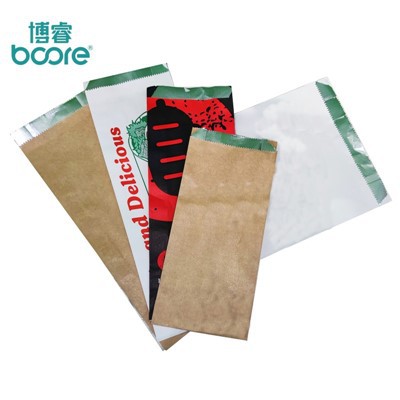
To discuss your specific packaging needs and get a quote, feel free to reach out. We’re here to help you find a durable, cost-effective solution that works for your business.
Food Packaging Film Series References
- H. B. Rath, “Advances in Polyethylene Coated Paper for Flexible Packaging,” Journal of Applied Polymer Science, vol. 115, no. 3, 2010, pp. 1652–1660.
- T. C. Patton, “Barrier Properties of Polyethylene Coated Paper Under Variable Humidity and Temperature Conditions,” Packaging Technology and Science, vol. 27, no. 8, 2014, pp. 647–658.
- American Society for Testing and Materials (ASTM), “Standard Test Method for Water Vapor Transmission Rate of Plastic Film and Sheeting,” ASTM E96/E96M-16, 2016.
- European Federation of Corrugated Board Manufacturers (FEFCO), “Durability Metrics for Paper-Based Packaging,” Technical Report 03/2021, 2021.
- National Food Processors Association (NFPA), “Packaging Guidelines for Frozen Food Using PE Coated Paper,” NFPA Bulletin 124, 2019.
Qingzhou Bright Packaging Technology Co., Ltd.
As one of the leading pe coated paper manufacturers and suppliers in China, we also support customized service. Welcome to wholesale high quality pe coated paper at competitive price from our factory. If you have any enquiry about quotation, please feel free to email us.
Address: 1 Yanying Road, Naoshan Development Zone, Qingzhou, Shandong Province, China
E-mail: Sales12@brpack.com
WebSite: https://www.qzbrpack.com/
