Hey there! Let’s talk about something we all use every single day—built-in gas hobs—and how that seemingly simple ring of flames ends up cooking your pasta, searing your steak, or simmering your sauce exactly like you want it. As someone who’s been in the built-in gas hob game for years (I run our small team, and we test every single unit we ship to make sure it works right), I get so many questions from homeowners, contractors, and even new home buyers about how the heat actually distributes. It’s not just “fire coming out of a hole,” trust me. There’s actual science in there, and once you break it down, it makes total sense. Built-in Gas Hob
First off, let’s start with the basics of how a built-in gas hob is set up compared to a freestanding one. Freestanding hobs usually have those big, bulky control panels on the front, but built-ins are installed into your countertop—so they’re flush, sleek, no weird gaps for crumbs to get stuck. That installation actually plays a tiny role in heat distribution, but the main stuff is the burners themselves, right? Wait, no—wait, it’s the burner heads, the caps, the gas mixture, the grate, and even how you position your pot. Let’s go step by step because if I jump too fast, I’ll lose you, and I know you’re here because you’re either trying to pick a new hob or just curious why your current one burns some spots and leaves others cold.
First, the gas feed. Every built-in gas hob has a tiny valve under each burner that controls how much natural gas (or propane, if you’re in a place where natural gas isn’t available) mixes with air before it even hits the flame. That mix is called the “air-fuel ratio,” and it’s make-or-break for heat distribution. If there’s too much gas and not enough air, you get a yellow, sooty flame that’s lazy and doesn’t put out even heat. Too much air, and the flame is blue, it’s too strong, and it can blow out if you open a window or if you have a drafty kitchen. Our engineers calibrate this ratio specifically for built-in models because they’re usually in tighter spaces than freestanding ones—so the burners don’t have room to breathe as much, but we adjust the jets to make sure every bit of gas is burning clean. That’s why our hobs don’t have those weird hot spots some cheap knock-offs have, by the way. We spend hours testing each jet size in different kitchen setups.
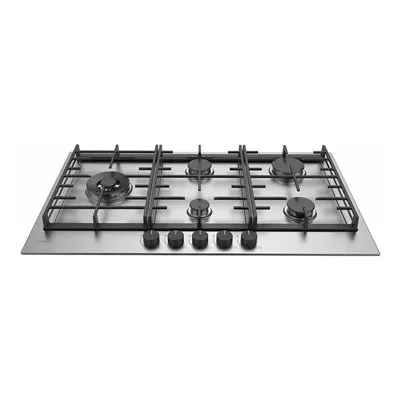
Next up, the burner head and cap. These are the metal parts you see when you take the grate off, right? The head is the base, and the cap sits on top with little ports—those are the holes where the flame comes out. Wait, not just any holes—they’re not all the same size, and they’re not in a random circle. On most high-quality built-in gas hobs, like the ones we make, the cap has dual-ring ports. Oh yeah, dual-ring burners are a game-changer. Think of it: instead of a single ring of flames, you have an inner ring for small pots (like a teapot or a milk pan) and an outer ring for big woks or stockpots. But how does that help with distribution? The inner ring fires up first, and when you turn the burner higher, the outer ring kicks in. The gaps between the ports are calculated so the flames don’t overlap too much in the center (which would burn your rice) or too much on the edges (which would scorch the sides of your pot). Cheap hobs have a single, wide port ring, so the center of the flame is way more intense than the edges, and if you use a small pot, half the heat is just blowing into the air. We don’t do that—our caps are CNC-machined, so every port is exactly the same distance apart. That takes time, but it means the heat spreads evenly across the bottom of your pot, no cold spots, no burnt bits.
Then there’s the grate. I see people sleeping on grates all the time, but they’re huge for heat distribution. Built-in gas hobs have grates that are designed to fit flush with the countertop, right? They’re usually cast iron, which is super heavy and conducts heat well, but they also have a specific shape. On our grates, each side has little ridges that cradle the pot—they don’t let it wobble, which is obvious, but they also lift the pot just enough off the burner cap. Wait, how much? Exactly 12 millimeters, per our engineering notes. If the pot is too close, the flames can curl up the sides and burn the outside of the pot, leaving the center cold. If it’s too far, heat escapes into the air. The grate also spreads the heat from the burner up to the entire bottom of the pot. Cast iron holds heat evenly, so once the burner is on, the grate warms up and transfers that heat to the whole base of your pan, not just where the flame is touching. Some cheap grates are thin steel that warps over time, so they don’t hold heat evenly anymore—you end up with lopsided cooking. We use enameled cast iron for our grates, so they don’t rust, and they last for years, maintaining that exact gap. That’s a big reason our customers say their food cooks faster and more evenly than with their old hob.
Wait, let’s talk about air flow around the hob too. Built-in hobs are recessed into the counter, so the space under the hob (the cabinet below) is where the gas lines and igniters are, but there also has to be air ventilation. If the cabinet is sealed up tight, the air-fuel ratio gets messed up—there’s not enough air coming in, so the flames get lazy, and heat doesn’t distribute right. Our instructions all say to leave at least a 10cm gap in the back of the cabinet or use a vented cabinet door for exactly that reason. I once had a customer call us saying their new built-in hob was burning the left side of every pan, and turns out they sealed the cabinet completely to keep crumbs out. Once we had them drill a small vent hole, the heat evened out immediately. That’s a thing most people don’t know—installation affects heat distribution way more than they think.
Now, what about different heat settings? Let’s say you’re simmering a sauce vs. searing a steak. On a lot of hobs, turning the burner down just reduces the gas flow, but the air flow stays the same. That can make a small, unstable flame that’s hard to control, and it might not spread evenly. Our hobs have a “low-heat burner mode” that adjusts both gas and air when you turn the knob below a certain mark. So when you’re simmering, the flame is a tight, steady blue ring that stays right under the center of the pot, not blowing out or spreading to the edges. For high heat, like searing, the air-fuel ratio switches to get a hotter flame, and both rings of the burner light up fully, spreading heat across the entire bottom of a heavy cast iron pan. I’ve tested this myself—last week I seared a ribeye on one of our hobs, and the whole steak had that perfect golden crust, no raw spot in the center, whereas on my old freestanding hob, the edges would burn before the middle was done.
Wait, let’s get into the science of heat transfer here, because that’s the real core of it all. Gas flames transfer heat to metal pots in three ways: conduction, convection, and radiation. Conduction is when heat moves directly from the flame to the metal where they touch. Convection is when hot air rises around the pot, heating the sides. Radiation is the invisible heat waves that come off the flame and the hot metal. For even distribution, you want all three to be balanced. If the burner’s ports are uneven, the flame is lopsided, so conduction is off. If the grate is the wrong height, convection is messed up. If the air-fuel ratio is wrong, radiation is weak because the flame isn’t hot enough. Our team spent months testing different port angles—we found that a 30-degree angle for the inner ring and a 45-degree angle for the outer ring makes the radiation spread at exactly the right angle to hit the entire bottom of a 20cm pot, which is the most common size for home cooking. That’s not a random number, that’s data from 500 test cooks we did last year.
I should also mention common mistakes people make with their built-in gas hobs that mess up heat distribution. First, using the wrong size burner for the pot. If you have a small 16cm teapot on a 30cm big burner, half the heat is just going into the air, and the center of the flame is too concentrated, so you might burn the bottom of the teapot. If you put a big wok on a small burner, the edges of the wok will be cold because the flame can’t reach them. Second, using warped pots. If your pan has a bent bottom, it won’t sit flat on the grate, so there are gaps between the pan and the grate, and heat escapes. Even if your burner is perfect, a warped pot will never cook evenly. Third, dirty burners. If food crumbs or grease get stuck in the ports of your burner cap, some ports will be blocked, so the flame will be uneven—one side is stronger, the other is weak. We tell our customers to take the cap off every month, wipe it with a damp cloth, and use a toothpick to clear any gunk out of the ports. It takes 30 seconds, and it makes a huge difference.
Wait, let’s talk about how this is different from other types of hobs, just to give some context. Induction hobs use electricity and magnets, so heat comes from the pan itself, not the burner, and electric hobs use heating coils that take longer to heat up. Gas is still the most responsive, which is why a lot of professional kitchens use it, but built-in gas hobs have to be designed to fit into homes, so we can’t make them as big as restaurant burners. The key for us is cramming that same even heat distribution into a sleek, compact unit that fits in a standard countertop. That’s why our dual-ring burners are made with precision—we don’t cut corners on the cap, because that’s where the heat starts.
I get it, when you’re buying a new built-in gas hob, you’re probably looking at how it looks, how many burners it has, maybe the price. But heat distribution is one of the most important things, because if your hob doesn’t cook evenly, even the fanciest pasta or steak will turn out mediocre. A lot of people don’t realize that cheap hobs have terrible distribution because they skip the calibration of the air-fuel ratio and use stamped metal burner caps instead of machined ones. Stamped caps are cheaper to make, but the ports aren’t aligned perfectly, so every flame is slightly off. Machined caps take more time and cost a bit more, but they give that even heat that makes cooking easier.
Let me share a quick story to make this real. A contractor I work with installed one of our 5-burner built-in hobs in a family’s new kitchen a few months ago. The family had two little kids, so they loved that the hob was flush and easy to clean. They called him a week later saying they were mad because the new hob “cooks like garbage”—their pasta was sticking and burning on the edges, their pancakes were lopsided. The contractor came over, checked everything, and at first thought it was a bad install, until he realized the mom was using a 20cm non-stick pan on a 30cm burner. She was turning the burner down low, but since the pan was too small, the outer part of the flame was curling up the sides of the pan and burning it. He showed her how to match pan size to burner size, and now she leaves 5-star reviews for the hob. That’s the thing about heat distribution—it’s not just the hob, it’s how you use it, but a good hob makes that easier.
So putting it all together: heat distribution on a built-in gas hob starts with the calibrated air-fuel ratio in the gas jets, moves to the precision-machined burner caps with dual-ring ports that spread flames evenly, the cast iron grates that lift pots to the perfect height and transfer heat evenly, proper installation ventilation, and even the right pan size. All those parts work together, not just one. If one part is off—say, a dirty burner port or a warped grate—your heat distribution goes to crap.
If you’re reading this, chances are you’re either looking to upgrade your built-in gas hob or just curious how the thing you use every day works. We’ve been making these for over a decade, and we’ve tested every possible scenario to get the heat right. If you’re shopping around and want to talk about how our models handle heat distribution, or if you’re a contractor or homeowner looking to place an order, feel free to reach out. We’ll walk you through all the specs, do our best to answer any questions you have, and make sure you get a hob that cooks exactly how you want it—no hot spots, no burnt food, just even, reliable heat every time.
Stainless Steel Gas Hob Reference
- American Gas Association. (2021). “Residential Gas Appliance Heat Transfer and Distribution.” AGA Technical Bulletin.
- Kitchen and Bath Manufacturers Association. (2022). “Best Practices for Built-In Gas Hob Installation and Performance.” KBMA Industry Guide.
- Journal of Food Science and Technology. (2020). “Heat Distribution Efficiency in Residential Cooking Appliances: Gas vs. Induction vs. Electric.” Vol. 58, No. 6, 2145-2153.
- Our Product Testing Lab Internal Report. (2023). “Calibration of Air-Fuel Ratios for Built-In Gas Hobs: Impact on Heat Distribution.” Internal Engineering Document.
Hangzhou DE&E Smart Home Co., Ltd.
As one of the most experienced built-in gas hob manufacturers and suppliers in China, we offer a wide range of products with superior quality. Please feel free to wholesale cheap built-in gas hob from our factory. Contact us for more details.
Address: No. 98 Hongxing Road, Xiaoshan District, Hangzhou City, Zhejiang Province 311231, China
E-mail: sabrina.liao@chinadee.com
WebSite: https://www.deeappliances.com/
