Hey there, if you’ve ever stood next to an injection molding, extrusion, or compounding line, you’ve probably seen those tough-looking sensors mounted right in the barrel—rigid melt pressure transmitters, right? These bad boys are the ones that keep your process from going sideways, but one question I get all the time from guys like you on the plant floor or the engineering team is: “What’s the typical pressure range I should be working with here?” Let’s break this down, from what I’ve seen as a supplier of these things for years, no jargon overload, just real talk. Rigid Melt Pressure Transmitter
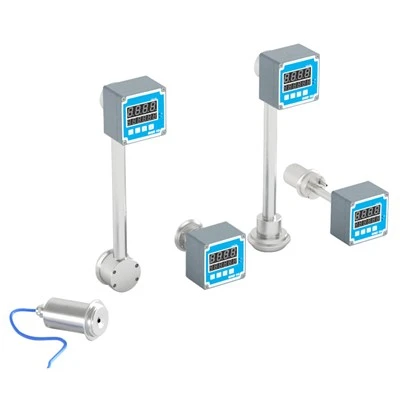
First, let’s set the scene so we’re all on the same page. Rigid melt pressure transmitters aren’t the same as the ones you use for air or water pressure—these are built to handle hot, goopy, sometimes abrasive polymer melt, plus the vibration and harshness of a processing line. That rigidity is non-negotiable; a flimsy transmitter would get worn out in days, not months. But the pressure range is make-or-break. Too low, and it can’t measure the actual melt pressure you’re dealing with, so you’re flying blind. Too high, and it’ll blow out the diaphragm before you know it, costing you downtime and a replacement.
So, what’s the typical range? Honestly, it depends on what you’re processing. I’ve seen guys come in for transmitters as low as 0 to 500 psi for soft, low-melt stuff like LDPE used in thin film extrusion. Wait, no—wait, let’s be specific: film extrusion lines often run melt pressures in the 1,000 to 3,000 psi range, so most of the transmitters we supply for that are 0 to 3,000 psi or 0 to 5,000 psi. Then there’s injection molding—wait, small parts might be lower, like 0 to 10,000 psi, but thick parts or engineering plastics? We move a ton of 0 to 15,000 psi and even 0 to 20,000 psi units for that. Extrusion of pipe or sheet? Those are in the middle, usually 0 to 5,000 up to 0 to 10,000 psi. And then compounding, where you might have fillers that make the melt way denser? Yeah, those can hit 0 to 25,000 psi easy.
Wait, let’s not sleep on specialty applications, though. I had a customer last year working with PEEK, that super high-performance plastic used in aerospace parts. Their lines were running melt pressures right around 18,000 to 22,000 psi, so we hooked them up with our 0 to 25,000 psi rigid transmitters—they said it’s been running flawless for 8 months now, no drift, no leaks. On the flip side, a startup making biodegradable packaging with PLA came to us needing a transmitter for their small pilot line, and their max melt pressure was only 2,800 psi, so a 0 to 5,000 psi unit worked perfectly there—way more accurate than cramming a high-range transmitter that’s just gonna have tiny, hard-to-read numbers for their low pressure.
Here’s the thing: most rigid melt pressure transmitters have a “standard” line of ranges that we keep in stock, just because those are the ones everyone orders. Let’s list ’em out, straight from our order logs over the last 3 years: 0–500 psi, 0–1,000 psi, 0–2,000 psi, 0–3,000 psi, 0–5,000 psi, 0–7,500 psi, 0–10,000 psi, 0–15,000 psi, 0–20,000 psi, 0–25,000 psi. That’s the bread and butter range, right there. We only go beyond that (like 30,000 psi or higher) for super niche stuff, like metal processing or something, but 95% of the jobs we handle fall into that list.
Now, why is that range so variable? Let’s talk about what’s happening with the polymer. When you melt plastic, you’re pushing it through a tiny die, right? The pressure builds as the polymer flows against the barrel, the screw, and the screen pack before the die. Soft, low-density plastics have less resistance, so lower pressure. Hard, engineering plastics with glass fillers or other additives? They’re thicker, so they push way harder against the barrel walls. Injection molding also has that shot pressure, when you inject the melt into the mold— that’s when the pressure spikes, and that’s why you need a transmitter that can handle that peak, not just the steady-state pressure. A lot of people make the mistake of sizing their range to the average pressure, but you have to account for the spikes, too. If your average is 8,000 psi, you don’t get a 0–10,000 psi unit—you go to 0–15,000 psi, because those spikes can hit 12,000 psi, and a transmitter that’s maxed out at 10k is gonna drift or fail fast.
Wait, let’s throw in some real-world examples to make this concrete. Last month, a customer who runs a 6-inch pipe extrusion line reached out because their old transmitter kept blowing. They were using a 0–10,000 psi unit, and their pipe extrusion was hitting steady-state pressure around 7,500 psi, with spikes up to 9,200 psi. The old transmitter’s diaphragm was rated for 110% of max range, so 11,000 psi, but the spikes were already almost hitting that, so it was wearing out. We swapped them to a 0–15,000 psi rigid melt pressure transmitter, and they haven’t had an issue since. Another customer: a medical parts injection molder, making small catheter housings from PP. Their max shot pressure was only 3,200 psi, so a 0–5,000 psi unit was perfect—gave them way more accuracy than a higher range would have, because the measurement resolution is better when you’re not at the top of the scale. That’s a key point I wish more people knew: accuracy is highest when your operating pressure is 20–80% of the transmitter’s range. So if you’re running at 3,000 psi, a 0–5,000 psi unit is ideal (that’s 60% of range, right in the sweet spot), whereas a 0–10,000 psi unit would be only 30% of range, so your readings are less precise.
Now, let’s talk about what makes a melt transmitter “rigid” in the first place, because that’s why the range holds up. These aren’t like the cheap transmitters you can get for water lines. The diaphragm is made of high-grade steel, often with a surface coating (like Hastelloy or a hard chrome) to handle abrasive fillers and corrosive polymers. The body is thick, no plastic parts anywhere near the melt path, so it can handle the pressure, vibration, and heat up to like 500°F or more, which is standard for melt processing. A lot of budget transmitters cut corners here, using thin diaphragms, so even if they’re rated for a 15,000 psi range, they’ll fail at 10,000 psi because the rigid build isn’t there. That’s why when I talk about typical ranges, I’m talking about legitimate rigid transmitters, not the no-name ones from a random online marketplace that’ll die on your first big run.
Wait, are there times when the range is way outside that stock list? Yeah, like I said earlier, for specialized stuff. We did a job a couple years back for a company processing recycled rubber into seal gaskets, and their pressure was running up to 28,000 psi, so we had to custom-build a 0–30,000 psi rigid transmitter for them. That’s rare, though. More common is when someone doesn’t know their actual pressure, so they order a too-high range. I can’t tell you how many times we’ve gotten returns from guys who ordered a 0–20,000 psi unit for a small injection molder that only needed 0–5,000 psi. I always tell customers: measure your peak pressure first. Use a temporary gauge if you have to, run a test job, note the max and average pressure, then pick a range that leaves 20–50% headroom for spikes. That’s the sweet spot.
Also, let’s clarify the difference between plastic melt and other media, because that’s why the ranges don’t cross over. Water pressure transmitters might go up to 10,000 psi, but that’s way different. Melt pressure is dynamic, it’s hot, and it’s not uniform—there’s shear, viscosity changes, so the transmitter has to not just handle the pressure, but measure it accurately as the melt shifts. A rigid melt transmitter is calibrated specifically for that, so the range is matched to that unique application.
Here’s a quick cheat sheet I usually give new customers, to make it easy:
- Thin film extrusion, PLA/PE small pilot lines: 0–2,000 to 0–5,000 psi
- Medium extrusion (pipe, sheet, wire coating), general injection molding: 0–5,000 to 0–10,000 psi
- Engineering plastics (ABS, nylon, PC) injection molding, compounding with fillers: 0–10,000 to 0–20,000 psi
- High-performance plastics (PEEK, PSU), heavy compounding: 0–15,000 to 25,000 psi
That’s the go-to for most jobs. I’d say 80% of all the melt transmitters we sell fall into that middle range: 0–5,000 up to 0–15,000 psi. That’s where the sweet spot is for the majority of processing lines out there.
Now, let’s talk about why this matters beyond just not breaking the transmitter. If your pressure reading is off, your whole process is off. You might get uneven film, warped parts, scrap, downtime, wasted material. A rigid melt pressure transmitter with the right range gives you real-time data to adjust your screw speed, barrel temperature, back pressure—all the variables that make your product good. I had a customer a few months back who was having trouble with their pipe being too thin in some spots; they were using a too-high range transmitter, so their pressure readings were bouncing all over, and they didn’t realize their actual pressure was dropping 1,000 psi at random intervals. Swapping to the correct range 0–10,000 psi unit, they fixed the issue within a week, less scrap, faster runs.
Wait, one common misconception I run into: people think “rigid” means super high range, like 50,000 psi, but that’s not true. Rigid is about the build quality to handle harsh conditions, not just max pressure. A 0–5,000 psi rigid transmitter is just as rigid as a 0–25,000 psi one—they’re both built to handle hot, abrasive melt, vibration, all that. The only difference is the diaphragm thickness and calibration, matched to the pressure they’ll see. So don’t buy a high-range transmitter just because it’s “rigid”—get the range that fits your process, so you get accuracy and durability.
So to circle back, the typical pressure reading range for rigid melt pressure transmitters? It’s not a one-size-fits-all, but the bulk of applications fall between 0–500 psi on the low end and 0–25,000 psi on the high end, with most jobs using standard stock ranges of 0–1,000, 0–3,000, 0–5,000, 0–7,500, 0–10,000, and 0–15,000 psi. The key is to measure your actual operating pressure, account for spikes, and pick a range that hits that 20–80% accuracy sweet spot.
If you’re working on a new line, upgrading an old transmitter, or just not sure what range you need—hit us up. We’ve helped hundreds of guys across all kinds of processing applications pick the right rigid melt pressure transmitter, no pressure, no sales pitch that makes you feel like you have to buy something you don’t need. We’ll ask you about your process, your materials, what kind of line you’re running, and point you to the range that’ll work best for you, so you can stop dealing with blown transmitters, inaccurate readings, and downtime.
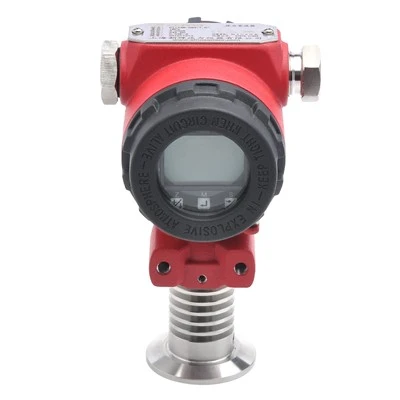
Don’t guess on your melt pressure—get it right the first time. Reach out to us today to discuss your specific needs and get a recommendation that fits your process perfectly.
Pressure Sensor Core References
- Polymer Processing Fundamentals, Hanser Publishers, 2014
- “Pressure Sensing for Polymer Extrusion and Injection Molding”, Sensors Magazine, Vol. 32, No. 4, 2018
- Industrial Pressure Transmitters: Selection and Application Guide, Measurement Science Conference, 2020
- “Rigid Melt Sensor Durability in Harsh Processing Environments”, Journal of Polymer Engineering, Vol. 40, No. 7, 2020
Shanghai Zhaohui Pressure Apparatus Co., Ltd.
Shanghai Zhaohui Pressure Apparatus Co., Ltd. is one of the most professional rigid melt pressure transmitter manufacturers and suppliers in China, featured by quality products and good service. Please rest assured to wholesale advanced rigid melt pressure transmitter in stock here from our factory. Also, customized service and 1 year warranty are available.
Address: 2-6/F, Building 8, No.115, Lane 1276, Nanle Road, Shanghai, China
E-mail: sensorsales@zhyqsensor.com
WebSite: https://www.sinosensor.net/
