If you’ve ever spent time in a warehouse, loading dock, or distribution center—even just waiting for a delivery to unload—you’ve likely seen them: the sturdy, sleeve-like structures that slide over wooden or plastic pallets, holding goods tight and upright. As a supplier of standard pallet sleeve boxes, I get asked this question all the time: “What’s the real purpose of these things?” It’s easy to write them off as just another packaging accessory, but over 12 years in this industry, I’ve seen how a standard pallet sleeve box isn’t just a container—it’s a critical piece of the puzzle that keeps supply chains running smoothly, safely, and affordably. Let’s break down what they do, why they matter, and how they’ve become a non-negotiable for businesses across manufacturing, retail, logistics, and beyond. Standard Pallet Sleeve Box
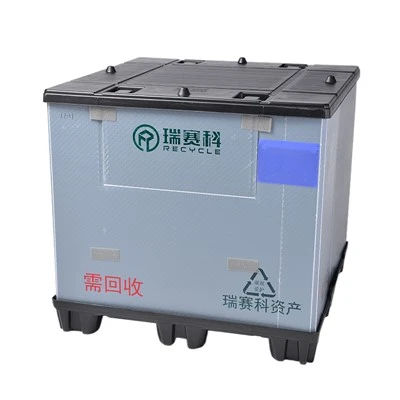
First, let’s start with the basics to set context. A standard pallet sleeve box is a collapsible or semi-rigid enclosure designed to fit snugly over a standard-sized pallet (most often 48”x40” in North America, or EUR 800×1200 mm in the EU, the two most common global pallet sizes). Unlike a fixed, one-piece pallet box that’s nailed or bolted together, sleeves are made from durable, lightweight materials—corrugated plastic, heavy-duty cardboard, or even woven polypropylene, depending on the use case—and designed to slide around palletized goods, then fold flat when empty. That’s a huge first perk right there: they don’t take up space when not in use, which saves on storage and return shipping, but their core purpose goes way beyond just being collapsible.
When we talk about purpose, the most immediate one is product protection, and it’s not just about keeping boxes of socks or bottled water dry. Let’s get specific: when goods are palletized and left uncovered, they’re vulnerable to a laundry list of common supply chain hazards. Outdoor storage? Rain, snow, wind-blown dust, and UV rays can damage packaging, warp products, or make labels unreadable. I’ve had a client in the outdoor equipment industry who used to store palletized patio umbrellas in a covered loading dock before switching to sleeve boxes—they were losing 3-4% of shipments each year to water stains on fabric and broken pole coatings, all because of unexpected splashes from a leaking roof. After switching to our UV-resistant polyethylene sleeve boxes, that loss dropped to less than 0.5%. That’s the kind of tangible impact we’re talking about.
Indoors, the risks are just as real. Warehouses are high-traffic environments, with forklifts, hand trucks, and even other pallets sliding around. An uncovered load can get scuffed by a passing forklift arm, knocked off-kilter by a bump in the floor, or even crushed if a top pallet is stacked too high. A standard pallet sleeve box distributes that weight evenly across the entire load, not just on the bottom edge of individual boxes. I had a snack food client once who was stacking 10 pallet loads of their product per rack tier, which they’d never do before switching to sleeves—without the sleeve, the top layer of boxes on the bottom pallet would collapse under the weight of the one above, leading to broken sealers, stale chips, and thousands of dollars in wasted product monthly. The sleeve box turned their pallet into a single, uniform unit, so stacking became safe, and their product damage from stacking fell by 60% in the first quarter.
The second big purpose is load stability, which ties directly to efficiency and safety. Palletized loads that shift during transport or storage are a nightmare for everyone: they fall off forklift forks, puncture other goods, cause accidents on delivery trucks, and delay entire shipments. Let’s think about long-haul trucking: a standard semi can carry 26 standard pallets, but those pallets have to stay secured to hit the truck’s weight limit and avoid shifting on the highway. A standard pallet sleeve box locks the entire load together, so it moves as one solid unit, not 20 separate boxes. We recently worked with a third-party logistics (3PL) provider that handled retail shipments for a big-box store chain. They told us that before using sleeve boxes, they were averaging 12 load-related accidents per month during transfers between trucks and warehouses, plus 2-3 delayed shipments a week from shifted loads that had to be rearranged. Six months after switching, those numbers dropped to 1-2 accidents a month and zero weekly delays from load shifting. That’s not just a win for their bottom line—it’s a win for driver and warehouse worker safety too.
Another layer to load stability is regulatory compliance, especially for industries like food and pharmaceuticals, where there are strict rules around how goods are stored and transported. The FDA, for example, requires that food products be protected from contamination during shipping, which often means they need to be enclosed in a way that meets certain sanitary standards. A standard pallet sleeve box made from food-grade corrugated plastic is sealed at the bottom and has a top flap that can be secured with plastic strapping or tape, creating a barrier between the product and the warehouse environment. For pharmaceutical companies, which often ship temperature-sensitive or sterile goods, sleeves can be lined with insulation or vapor barriers to maintain consistent conditions, while still fitting standard pallet sizes that work with automated warehouse systems. Automation is a big one here—most modern warehouses use conveyor belts, robotic pickers, and automated storage and retrieval systems (AS/RS) that only work with uniform, standard-sized pallets. A custom or irregularly shaped load won’t fit through a conveyor or get picked by a robot, but a sleeve box turns any set of palletized goods into a uniform, standard unit that works with existing automation. That’s a huge reason businesses invest in them—they don’t have to overhaul their entire warehouse setup; they just add a small accessory that makes their loads compatible with what they already have.
Cost efficiency is often the unsung purpose of the standard pallet sleeve box, especially when you look at the full supply chain lifecycle. Let’s do a quick breakdown: when you use a fixed, one-piece pallet box, you pay for the material upfront, and when it’s empty, it takes up almost the same amount of space as when it’s full—so returning it for reuse costs more in shipping, and storing it takes up valuable warehouse space. A standard sleeve box, on the other hand, folds flat to 10% of its full height when empty, so return shipping costs are cut by up to 90%, and you can store 10 empty sleeves in the same space as one full fixed box. I had a client in the e-commerce space who was using fixed plastic pallet boxes for their inventory, and they were paying $1.20 per unit to have empty boxes returned to their warehouse across the country. After switching to our foldable corrugated plastic sleeves, that cost dropped to $0.15 per unit—they saved over $80,000 in a single year on return shipping alone, plus they had 200 extra square feet of warehouse space that was previously used to store empty fixed boxes.
Durability is another cost factor. A good standard pallet sleeve box can be reused 20-50 times, depending on the material, which is way more than a single-use corrugated box. That means you’re not throwing away a new box every time you unload a pallet—you use the same sleeve for multiple shipments, which adds up to big savings over time. We have a client in the automotive parts industry that ships small engine components to assembly plants across the Midwest; they’ve been using our high-density polyethylene sleeves for over 5 years now, and the average lifespan of a sleeve in their fleet is 35 shipments. They calculate that each sleeve costs about $12, and since they use it 35 times, that’s $0.34 per use, compared to a single-use corrugated box that costs $0.80 per use. Multiply that by 10,000 shipments a year, and that’s $4,600 in annual savings—enough to cover a full-time warehouse employee’s salary for most small businesses.
Wait, but what about when you need to access the goods inside? A lot of people assume that sleeves are hard to open or take goods out of, which is a valid concern. But a core design purpose of the standard pallet sleeve box is accessibility without sacrificing protection. Most sleeves have side flaps that can be easily opened with a forklift or hand truck, or even cut open if you need full access to the entire load, without having to unstack every single box. That’s a big difference from a fixed pallet box, where you might have to remove the entire top or sides just to get to a single layer of goods. For example, a grocery chain that restocks shelves from pallet loads only needs to open one side of the sleeve to slide individual cases out, which cuts down on restocking time by 30% compared to dealing with fixed boxes.
Now, it’s important to note that not all sleeve boxes are created equal, which is why choosing a standard, size-compliant one matters so much. A lot of businesses try to cut corners by using a generic, non-standard sleeve that doesn’t fit their pallets correctly, and that leads to all the problems we talked about earlier—load shifting, product damage, compatibility issues with automation. A standard pallet sleeve box is designed to fit exactly to the dimensions of a standard pallet, with reinforced corners that add extra strength for stacking, and drainage holes if you need to store goods in areas where moisture might collect. It’s also made from materials that meet industry-specific standards, like food-grade for grocery, low-VOC for sensitive products, and UV-stabilized for outdoor storage. As a supplier, that’s what we focus on: consistency. Every sleeve we make is manufactured to exact dimensions, tested for weight capacity (most can hold up to 2,000-4,000 lbs per pallet, depending on the material), and certified to work with standard pallet sizes used in North America, Europe, and Asia.
I’ve seen how standard pallet sleeve boxes evolve with the industry too. Ten years ago, they were mostly used for heavy industrial goods or bulk shipments, but now they’re used by everyone from small craft breweries shipping beer kegs to online retailers bulk-shipping seasonal inventory to fulfillment centers. During the 2020 pandemic, when supply chains were under unprecedented stress, we saw a 400% increase in orders for sleeve boxes, because businesses needed a way to ship and store goods safely without taking on extra space or cost. That spike wasn’t just a trend—it was proof that their core purpose is foundational to modern supply chains, not just a nice-to-have accessory.
At the end of the day, the purpose of a standard pallet sleeve box boils down to three interconnected goals: protecting products, making supply chains more efficient, and reducing overall costs. It’s not a glamorous piece of equipment, but it solves problems that every warehouse, logistics team, and business owner deals with on a daily basis. Whether you’re a small business that ships 10 pallets a month or a large corporation that ships 10,000, investing in standard, quality sleeve boxes isn’t just about buying a container—it’s about reducing product loss, cutting shipping and storage costs, improving worker safety, and making your entire operation run smoother.
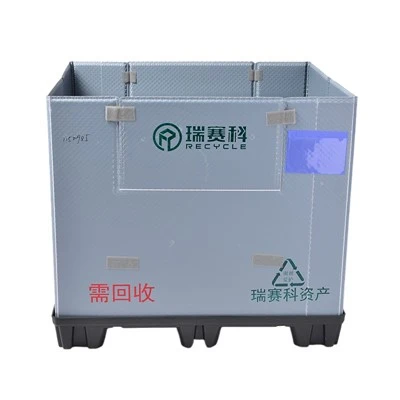
If you’re currently dealing with load shifting, product damage, wasted storage space, or high return shipping costs, a standard pallet sleeve box is likely the solution you haven’t considered yet. We work with businesses across all industries to customize sleeves to their specific needs, whether that’s adding insulation for temperature-sensitive goods, reinforcing corners for heavy loads, or creating custom-sized sleeves to fit specialized pallets. We’re here to answer questions, provide quotes, and help you figure out what works best for your supply chain. To get started with a conversation about how standard pallet sleeve boxes can improve your operations, reach out to our team to discuss your procurement needs today.
Standard Pallet Sleeve Box References
- Global Pallet Design Standards Council. (2022). International Pallet and Container Compliance Guidelines.
- Logistics Management Association. (2023). Annual Supply Chain Equipment Efficiency Report.
- U.S. Food and Drug Administration. (2021). Food Shipping and Storage Sanitation Standards.
- Material Handling Industry Association. (2022). Standard Pallet Sleeve Box Lifespan and Cost Analysis.
- European Pallet Association. (2023). EUR Pallet Compatibility for Packaging Solutions.
Jiangsu Recycle Logistics Technology Co., Ltd.
Jiangsu Recycle Logistics Technology Co., Ltd. is one of the most professional standard pallet sleeve box manufacturers and suppliers in China. We have world-leading production equipment and strong manufacturing capabilities. Please feel free to wholesale bulk custom made standard pallet sleeve box from our factory.
Address: Jiangsu Recycle Logistics Technology Co., Ltd., No.6 Yongcheng Road, Shanghu Town, Changshu City, Jiangsu Province
E-mail: packing@szrecycle.cn
WebSite: https://www.js-recycle.com/
