When clients first reach out to our ultrafiltration (UF) membranes team, they often come with a very specific problem: their existing water or wastewater system isn’t removing enough of the unwanted stuff that’s making their process inefficient, their product unsafe, or their compliance team pulling their hair out. I get it—when I started working in membrane technology over 12 years ago, I thought UF was just another “water filter” product, same as the ones I’d seen in home appliances. That was before I realized how much more precise, and how much more impactful, UF membranes really are. Today, I want to break down exactly what contaminants our UF membranes eliminate, why that matters for industries from food and beverage to pharma to municipal water treatment, and what makes our products stand out when you’re looking to upgrade your system. Ultrafiltration Membranes
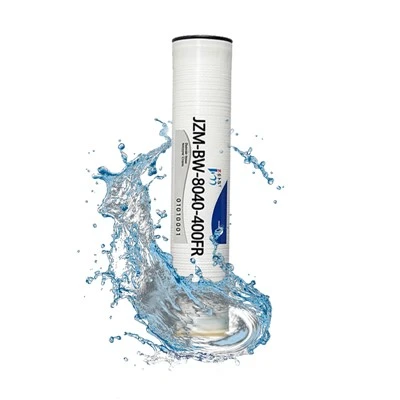
First, let’s get one key point straight: UF operates on a size-based exclusion principle, not charge or solubility like some other filtration methods. That’s why it’s such a workhorse for so many applications. The membrane’s pores are typically between 0.001 and 0.1 micrometers (μm)—for context, a human red blood cell is about 7-8 μm, a bacterium is around 1 μm, and a virus is somewhere between 0.02 and 0.3 μm. Wait, I know what some of you might be thinking: “If UF’s pores are 0.001 to 0.1 μm, that’s smaller than bacteria but a bit bigger than some viruses.” It’s true, and that’s a deliberate design choice. Unlike reverse osmosis (RO), which can remove even small dissolved salts, UF targets larger, more problematic contaminants that often pass through microfiltration (MF) or even some cartridge filters. Let’s dive into each category, with real-world examples of where we’ve seen our membranes make a difference.
First up: microorganisms. This is where UF really shines, and where most of our industrial clients start seeing immediate results. Bacteria are the biggest win here. Pathogens like E. coli, Salmonella, Legionella, and Pseudomonas aeruginosa—all of which can cause serious illness if they end up in product water, process water, or drinking water—are way too big to pass through our UF membranes. In one recent project with a craft brewery, they were using MF to filter their process water for brewing, but they kept getting occasional Legionella detections that caused batches to be rejected. Swapping in our UF membranes cut those detections to zero within 30 days, and their product consistency improved so much they expanded the system to two more brewhouses six months later. That’s not an isolated case: UF removes over 99.99% of most pathogenic bacteria, per independent lab tests we run regularly for our own quality control.
What about viruses? As I mentioned, some viruses are slightly smaller than UF’s typical pore size, but that doesn’t mean they get through. Why? It’s not just size—virus particles have a slight negative charge, and most UF membranes (especially the ones we manufacture) are also negatively charged. That electrostatic repulsion keeps even small viruses from adhering to or passing through the membrane pores. For pharma clients, who need water for drug formulation that’s 100% free of viral contaminants, this is non-negotiable. We’ve worked with a generic drug manufacturer that had been using expensive viral inactivation processes that added extra steps and time to their production line; switching to our UF membranes let them eliminate those steps entirely, cutting production time by 18% and reducing waste by 22%. That’s a win that goes straight to their bottom line. And let’s not forget about other microorganisms: protozoa like Giardia and Cryptosporidium, which are common in municipal water supplies and can cause gastrointestinal illness, are also easily removed by UF. A municipal water treatment client in the Pacific Southwest told us that before installing our UF membranes, they had to issue boil-water advisories twice a year during heavy rain events, when runoff washed more Cryptosporidium into their source water. A year after swapping to UF, they haven’t had a single advisory.
Next, colloids and suspended solids. These are the tiny, invisible particles that don’t sink (hence “colloid”) and can cause all kinds of headaches in industrial processes. Things like clay, silt, rust particles, metal oxides (iron, manganese, aluminum), and organic matter like humic and fulvic acids. Let’s talk about iron, for example—many industrial water sources have high iron content, which causes staining in textiles, off-flavors in food products, and fouling in heat exchangers and pipes. MF can’t remove fine iron oxides, because their particles are just small enough to slip through microfiltration pores. But UF? Its 0.001 μm pores capture those tiny particles, and our membranes are designed with a smooth, non-fouling surface that keeps those particles from building up and clogging the membrane too quickly. A municipal wastewater reclamation plant we partner with had been struggling with iron fouling on their RO membranes, which meant they had to clean the RO every two weeks. Adding our UF as a pre-treatment step extended RO cleaning intervals to every 12 weeks, cutting their maintenance costs by 40% in the first six months. Humic acids, the organic matter that turns water brown and can react with chlorine to form disinfection byproducts (DBPs) like trihalomethanes (THMs), are also removed by UF. That’s a big deal for compliance with EPA and EU regulations that limit DBP levels in drinking water. We’ve had drinking water utilities tell us that using our UF membranes reduced their DBP formation by 35% just by removing those precursor organic compounds.
Then there are macromolecules and large organic compounds. This is a category that a lot of people overlook, but it’s critical for industries that deal with product recovery or water reuse. Macromolecules like proteins, polysaccharides, starches, and even some synthetic polymers are too large to pass through UF membranes, so they’re retained on the feed side. For the food and beverage industry, that means you can recover valuable ingredients you’d otherwise have to throw away. For example, a dairy client of ours was whey processing—whey has high levels of lactose and proteins, and before using UF, they were discharging it as wastewater, which was not only wasting product but also causing high BOD (biological oxygen demand) that made their wastewater treatment costs skyrocket. Installing our UF membranes let them separate whey proteins (which they sell as a high-value food additive) from lactose and water, reducing their wastewater BOD by 80% and adding an extra $1.2 million in annual revenue from the recovered protein. That’s the kind of impact that makes UF a no-brainer, not just a “nice-to-have” upgrade.
Wait, let’s be transparent here—UF has its limits, and it’s important to talk about what it can’t remove, too, because that helps you understand when it’s the right fit (and when you might need to add another step like RO). UF doesn’t remove dissolved salts, like sodium, chloride, or calcium, which is why it’s not a desalination technology. It also doesn’t remove very small dissolved organic compounds, like pesticides, pharmaceuticals, or volatile organic compounds (VOCs) that are smaller than its pore size. But that’s actually a benefit for many applications—for example, if you’re reusing water in a manufacturing process, you don’t want to remove valuable dissolved minerals that your process needs, and you might not need to remove trace VOCs if your use case doesn’t require it. That’s why we always work with clients to design a system that’s tailored to their specific needs, not a one-size-fits-all solution.
Now, let’s talk about what makes our UF membranes different from the generic ones you might find online or from big suppliers. When I started in this industry, I saw a lot of clients buy cheap membranes that worked for six months and then clogged, or didn’t perform as promised. That’s why we manufacture our UF membranes with a highly porous, asymmetric structure—meaning the top layer has the precise pore size we need for exclusion, and the inner layer has larger pores to reduce flow resistance, so you get higher permeate rates without sacrificing removal efficiency. We also use a crosslinked polymer material (polyethersulfone, or PES) that’s resistant to pH extremes, cleaning chemicals, and biological growth, so our membranes last 20-30% longer than standard UF membranes we’ve tested against. That lower replacement frequency means you save money in the long run, not just on upfront costs but on maintenance and downtime.
A lot of people ask us about fouling, which is the biggest challenge with any membrane. Our membranes are engineered with a hydrophilic surface, which means water molecules adhere to the surface more easily than organic or inorganic particles, so those particles don’t stick as easily. We also offer custom cleaning protocols tailored to each client’s application, so when fouling does occur, we can get the membrane back to peak performance faster, reducing downtime. For example, a textile mill in the Southeast had been struggling with fiber fouling on their previous UF membranes; we worked with them to adjust their backwash frequency and use a mild enzymatic cleaner, and now their membrane fouling rate is 30% lower than before, and they’re able to run 10% more product through their system each month.
At the end of the day, the question “what contaminants do UF membranes eliminate?” isn’t just a technical one—it’s a practical one, tied to your specific industry, your regulatory requirements, and your bottom line. Whether you’re a small brewery looking to reduce batch rejection, a pharma company needing virus-free water for drug production, a municipal utility looking to avoid boil-water advisories, or a manufacturer looking to cut wastewater costs and recover valuable product, our UF membranes can be tailored to meet your needs.

I’ve been in this industry long enough to know that upgrading a membrane system can feel like a big investment, but the payoff almost always comes faster than you expect. We’ve worked with hundreds of clients across North America and Europe, and every single one has told us that the improved water quality and reduced operational costs make the investment worthwhile. If you’re currently dealing with recurring issues like microbial contamination, fouled equipment, high wastewater treatment costs, or product loss, I’d encourage you to reach out to our team to learn more about how our UF membranes can solve those problems. We don’t do one-size-fits-all proposals—we’ll walk through your specific challenges, test your water if needed, and design a system that works for you.
Desalination Equipment References
- Baker, R. W. (2012). Membrane Technology and Applications (2nd ed.). John Wiley & Sons.
- World Health Organization. (2017). Ultraviolet and Membrane Technologies for Drinking Water Treatment. WHO Press.
- International Water Association. (2020). UF Membranes in Water and Wastewater Reclamation: Best Practices. IWA Publishing.
- American Water Works Association. (2018). Ultrapure Water for Pharmaceutical Applications: Membrane Filtration Technologies. AWWA.
Shandong Jinzhimo Environmental Protection Technology Co., Ltd.
As one of the most professional ultrafiltration membranes manufacturers and suppliers in China, we also support customized service. Please feel free to wholesale advanced ultrafiltration membranes in stock here from our factory. For pricelist, contact us now.
Address: No. 689 Jincheng Road, Zhaoyuan City, Yantai City, Shandong Province
E-mail: zln@jinzhimo.com
WebSite: https://www.sdjzmhb.com/
