When I first started working as a heat exchanger parts supplier over a decade ago, I thought the main goal was just to deliver high-quality parts that fit and function. Back then, if a client told me their shell and tube heat exchanger needed new baffles or tube sheets, I’d focus on matching dimensions, using the right metal grade, and making sure every weld held up under pressure. But after hundreds of client visits, late-night troubleshooting sessions, and listening to plant managers talk about lost productivity due to inefficient heat transfer, I realized something: most of the issues that slowed their operations didn’t come from bad parts—they came from parts that weren’t designed to work seamlessly with the rest of the system. That’s why optimizing heat exchanger part design isn’t just a nice-to-have for suppliers; it’s the difference between a part that works and a part that makes a plant run better, safer, and cheaper. Heat Exchanger Parts
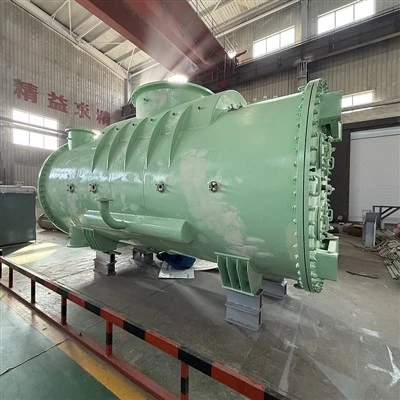
Let’s start with the part that’s often the unsung hero of any shell and tube heat exchanger: baffles. Baffles aren’t just there to hold tubes in place—they direct the shell-side fluid across the tubes, forcing it to flow perpendicularly instead of parallel. Parallel flow lets heat slip past unused, but perpendicular flow boosts turbulence, which improves heat transfer. For years, I’d supply segmental baffles—half-moon shapes that are the industry standard—because that’s what every spec sheet called for. But then a food processing client came to me complaining that their heat exchanger was only reaching 75% of its expected efficiency. They were processing liquid milk, and the fluid was viscous, so it was lagging as it moved across the baffles, creating dead zones where milk would sit and risk spoiling. I dug into their setup, and we switched their segmental baffles to helical baffles. Instead of folding back and forth, helical baffles create a single, continuous spiral path for the shell-side fluid. That eliminated those dead zones, increased turbulence, and got their heat transfer efficiency up to 92% within a month. Now, every time a client works with viscous fluids—like syrup, heavy oils, or wastewater—I flag helical baffles as a design tweak, not just a standard part.
The mistake a lot of part suppliers make with baffles is sticking to a one-size-fits-all approach. Baffle cut, for example, is the percentage of the shell diameter that the baffle removes to let fluid pass. A 25% cut works for low-pressure, low-viscosity systems, but a 45% cut is better for high-pressure gas flows, because it reduces the pressure drop that can force pumps to work harder. I once had a chemical plant tell me their pump was breaking every six months because the shell-side pressure was too high. We adjusted their baffle cut from 30% to 40%, and the pump failure rate dropped to zero. It’s a small change, but it makes a huge difference in both efficiency and maintenance costs.
Next up are tube sheets, the thick plates that hold all the tubes in place and separate the shell-side and tube-side fluids. The design of tube sheets is often limited by standard thicknesses, but that’s another area where optimization pays off. A client in the power generation sector came to me with a problem: their tube sheets were corroding on the shell side, which caused leaks that shut down their steam line. The original tube sheets were made from carbon steel, which is cheap but doesn’t hold up to the high-velocity steam they were using. We didn’t just switch to stainless steel—we optimized the hole pattern in the tube sheet. Most tube sheets have holes drilled in a triangular pitch, which is easy to machine and fits more tubes, but triangular pitch can create more stress around each hole when the tubes expand and contract with temperature changes. We switched to a square pitch for their application, which reduced stress concentrations by 22% according to their engineering team, and we added a thin layer of cladding on the shell side of the tube sheet with a corrosion-resistant alloy. That fixed the leaks, and their tube sheet lifespan went from 3 years to 7.
The hole size in tube sheets is another detail that’s easy to overlook. If a tube hole is too tight, it’s hard to insert the tube during assembly, and that can lead to deformation, which creates gaps where fluid can leak. If a hole is too loose, the tube can vibrate during operation, leading to tube fatigue and failure. We worked with a refinery client to calibrate their tube hole size: they had been using a 0.1mm gap between tube and hole, which was causing too much vibration. We adjusted the gap to 0.2mm, which was just enough to let the tube expand without shaking, and their tube failure rate dropped by 40%.
Then there are the tubes themselves—probably the most visible part of a heat exchanger, but still a part where design optimization is possible. Most clients use seamless tubes, but the type of tube can make a big difference. For example, finned tubes—tubes with thin metal fins wrapped around the outside—are perfect for shell-side fluids that are gases, because gases have a low heat transfer coefficient. Adding fins increases the surface area for heat transfer, so the same number of tubes can move more heat without increasing the size of the exchanger. A client in the HVAC industry was trying to make a compact heat exchanger for rooftop units; they were using plain copper tubes, but they couldn’t get enough heat transfer without making the unit too big. We suggested micro finned tubes, which have tiny fins inside the tube as well. That increased the tube-side heat transfer area, and their unit size shrank by 18% while maintaining the same cooling capacity.
Another tube design tweak is oval tubes instead of round tubes. Most heat exchangers use round tubes, but oval tubes have a larger perimeter for the same cross-sectional area, which means more surface area for heat transfer. They also create more turbulence in the shell-side fluid because of their shape, so you don’t need as many baffles. We tested oval tubes with a wastewater treatment client, and they saw a 15% improvement in heat transfer efficiency while cutting their baffle costs by 25% because they only needed two baffles instead of four. The only catch is that oval tubes require custom tube sheets, since standard tube sheets are made for round tubes—but for clients looking to optimize existing systems, switching to oval tubes can be a game-changer without a full system redesign.
Gaskets and seals are another set of parts that people don’t think about when optimizing design, but they’re critical for preventing leaks and maintaining pressure. I’ve seen too many plants shut down just because a gasket failed, and 9 times out of 10, the gasket was the wrong material for the operating conditions. For high-temperature applications, like furnaces or steam lines, rubber gaskets don’t hold up—they melt or crack, leading to leaks. For low-temperature cryogenic applications, the opposite is true: metal gaskets can be too brittle and crack, while rubber or elastomer gaskets stay flexible. We worked with an aerospace client that needed a heat exchanger for a rocket fuel system; they were using metal gaskets that kept failing at -180°C. We switched them to a PTFE-based gasket, which is flexible at low temperatures and resistant to both fuel and oxygen, and that solved their leak problem.
The design of the gasket’s shape also matters. Standard flat gaskets work for low-pressure systems, but spiral-wound gaskets are better for high-pressure and high-temperature applications, because they have a metal core with a filler that compresses evenly to create a tight seal. A chemical plant client had a pressure drop issue because their gaskets were leaking, which meant they had to operate at lower pressures to avoid leaks. We replaced their flat gaskets with spiral-wound gaskets, and they were able to increase their operating pressure by 30%, which boosted their production output by 20%.
All of these design tweaks rely on something we’ve invested a lot in as a supplier: close collaboration with our clients’ engineering teams. Too often, suppliers just ship parts based on spec sheets, but the best optimizations come from understanding the specific conditions a client operates in. Last year, a wind farm client came to us with a heat exchanger for their gearbox oil. The oil was running too hot, which was reducing the gearbox’s lifespan. They were using a standard air-cooled heat exchanger, but their wind turbine is on a mountain where the air is cold and dry, but it’s also very dusty, which was clogging the fins on the exchanger. We didn’t just suggest a bigger exchanger—we worked with them to redesign the air-side fins of the heat exchanger’s tubes to have a wider spacing, so dust couldn’t get stuck as easily. We also added a small, custom fan blade design that was shaped to blow air through the exchanger without creating turbulence that would carry dust. That cut the oil temperature by 10°C, which extended the gearbox’s lifespan by an estimated 5 years, and reduced the time they spend cleaning the exchanger by 70%.
The key takeaway here is that optimizing heat exchanger part design isn’t about making parts more complex—it’s about making parts work with the system they’re in, not against it. It’s not just about higher efficiency; it’s about lower maintenance, longer part lifespan, less downtime, and lower operating costs. As a supplier, we’ve learned that the best way to serve our clients is to look at their whole system, not just the part they asked for. A baffle that works for one plant might cause problems for another, a tube that’s cheap might end up costing more in maintenance, a gasket that fits might fail in a year.
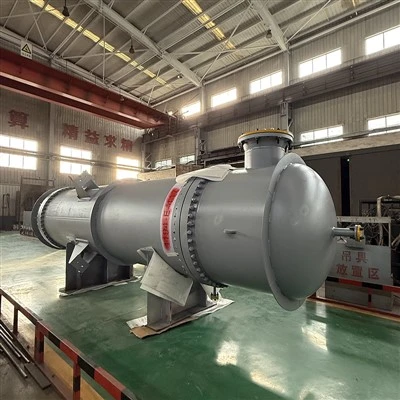
If you’re looking to get more out of your heat exchanger, whether it’s boosting efficiency, reducing downtime, or cutting costs, we can work with you to design custom parts that fit your exact needs. We don’t just ship standard parts—we collaborate with your team to analyze your operating conditions, troubleshoot pain points, and design parts that are optimized for your system. To start a conversation about how we can help you optimize your heat exchanger parts, reach out to our team today to discuss your specific application.
Heat Exchanger References
- Shah, R. K., & Sekulic, D. P. (2003). Fundamentals of Heat Exchanger Design. John Wiley & Sons.
- Hewitt, G. F. (2008). Heat Exchanger Design Handbook (2nd ed.). CRC Press.
- Standards and Practices for Shell and Tube Heat Exchangers, Tubular Exchanger Manufacturers Association (TEMA), 2019.
Shandong Meiling International Trading Co., Ltd.
We are one of the most professional heat exchanger parts manufacturers and suppliers in China, featured by quality products and good service. Please feel free to wholesale advanced heat exchanger parts made in China here from our factory. Customized orders are welcome.
Address: No. 998 Niushan Road, Linzi District, Zibo City, Shandong Province
E-mail: dingxiaoli@sdmeiling.com.cn
WebSite: https://www.ml-heatexchanger.com/
