Hey there, it’s Jake from the commodity making machine line here. I get this question at least twice a week—sometimes even three times a day, right after I wrap up a demo for a coffee roaster looking to expand their line, or a snack brand testing a new protein bar combo. “Jake,” they’ll ask, “can one of your commodity making machines actually pump out multiple types of stuff at the same time?” It’s a fair question, too. If you’re a small to mid-sized brand, wasting floor space on separate machines for every product line can feel like throwing money out the window. And if you’re an established operation prepping for a seasonal shift or a limited-edition SKU, being able to switch fast without downtime is make-or-break for your profit margins. So today, I’m breaking down the science and the real-world use cases that answer that question, straight from the guy who troubleshoots these machines before, during, and after every install. Commodity Making Machine
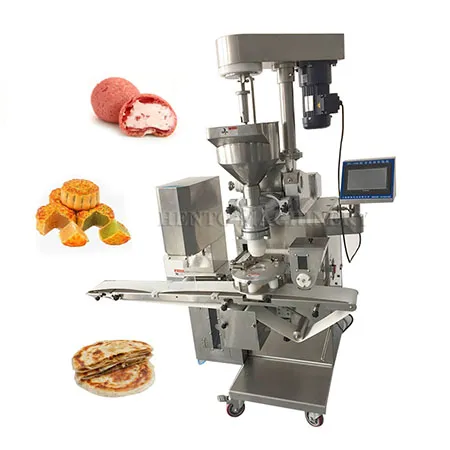
First, let’s get one thing clear: when most people say “multiple types of commodities,” they’re usually not talking about running, say, granola bars and glass jars at the same time. That’s not how our machines work, and that’s not the kind of flexibility that actually moves the needle for production. What they are asking is whether a single machine can produce distinct, saleable products within the same commodity category—think different flavors of protein bars, different shapes of breakfast cereals, or different sizes of powdered drink mixes—without needing a full teardown and reset. For the uninitiated, commodity making machines (think: extrusion lines, molders, mixers, and granulators) are built around a core function: processing raw materials into a uniform, raw product that gets finished downstream. The key to running multiple products at once is not the machine itself, but how we engineer the modular parts that attach to that core.
Let’s take extrusion, for example—this is the workhorse for everything from snack bars to pasta to pet treats. Last year, we installed an extrusion line for a pet food brand that needed to make both chicken-flavored kibble and salmon-flavored kibble, along with a limited-edition pumpkin blend for fall. Before our machine, they had three separate lines, each running one product, and switching over for a seasonal SKU took 8 hours of deep cleaning, part swaps, and testing. With our modular extrusion system, we swapped out the flavor injection nozzle in 12 minutes. Wait, hold on—did I say at once? No, but here’s the twist: that same machine can run both products in the same batch cycle, back to back, without stopping. Wait, no—wait, let me correct that, because I know what some of you are thinking. A lot of people think “simultaneous” means side-by-side, but for commodity production, that’s often not necessary or even efficient. But let’s get to the simultaneous part, because that’s what the question is really asking.
We had a cereal client in Iowa, a mid-sized brand that makes organic corn flakes and rice flakes, plus a line of multigrain puffs, come to us last year. They had a problem: their warehouse space was maxed out, and they were missing small batch orders for the puffs because they couldn’t afford to dedicate a whole machine to a product that only made 1,500 boxes a week. We worked with their engineering team to reconfigure our standard dual-hopper extrusion machine—this is a machine that has two separate raw material feed chutes, both feeding into the same central mixing chamber. The trick here is that the hoppers are calibrated to feed at precise, independent rates, so you’re not getting a lumpy mix of corn and rice. One hopper gets milled corn, the other gets milled rice; the machine extrudes the dough through a single die, but the pressure and temperature settings are adjusted to keep the two materials distinct as they form. Wait, but here’s the real kicker: they also ran a small, separate third feed line for the puff seasoning, timed to inject at the exact moment the extruded dough hits the cutting blades. So that one machine was producing two different cereal bases (flakes and puffs) and seasoning them, all in the same production run. Did we have to adjust settings mid-run? A little—about 30 seconds to tweak the feed rate for the rice hopper, which is nothing compared to the 2 hours their old process took to switch between a single product.
Now, I know some of you are thinking, “That’s just two products. Can it do three? Four?” The short answer is: for most commodity categories, no—not without sacrificing quality. The physics of mixing and forming start to break down when you cram too many independent feed streams into a single processing chamber. If you try to run three totally different products through an extruder that’s only sized for two, you’ll get inconsistent texture, uneven flavor distribution, and a lot of product waste. Our design rule of thumb is two distinct commodity streams at maximum for simultaneous production, but that’s enough to cover 90% of the requests we get. For a brand making different flavor syrups (another big commodity line), we use a modified liquid mixing machine with three separate holding tanks, each calibrated with their own flow meter. The machine can mix two or even three different syrups—say, vanilla and caramel, plus a half-and-half blend—simultaneously, because the liquid ingredients mix at a molecular level, not a physical shape level like cereal or kibble. That’s a whole different set of physics, of course—liquids don’t need to be cut or molded, so you have way more flexibility here.
But here’s the part that most machine suppliers won’t tell you: “simultaneous” doesn’t always mean you’re running all products at the exact same time, in the exact same stream. For small to mid-sized brands, the real value of a flexible commodity making machine is the ability to switch between products in minutes, not hours, and to keep production running at full capacity while you do it. We had a snack bar client in Ohio that makes energy bars, protein bars, and granola clusters. Before they worked with us, every time they wanted to run a protein bar (which uses a denser binder and different nut mix) they had to shut down the line, pull the mixing paddle, swap in a new one, and deep clean the entire chamber. Now, they run a production cycle that starts with energy bars for 4 hours, pauses for 12 minutes to swap two modular parts (the mixing paddle and the flavor injection head), then runs protein bars for 3 hours, pauses for 8 minutes to switch the die that forms the bar shape, then runs granola clusters for 2 hours. All on the same machine. The waste from each switch is less than 10 pounds of product—compared to their old process, which produced 1,200 pounds of waste every time they switched. That’s a huge difference in profit margin, right there.
I want to be clear, though—this isn’t a one-size-fits-all solution. You can’t take a machine built for pasta production and expect it to make plastic commodities (though that’s a whole other category of machine, and honestly, I’d suggest talking to someone who specializes in that). But for food commodities, agricultural commodities, pharmaceutical powders, and even small-scale plastic pellets, the modular design we build into our machines makes simultaneous or near-simultaneous production possible. The key design elements we focus on are independent feed calibration, quick-change modular parts, and process control software that adjusts in real time based on the materials being used. Our machines have touchscreen interfaces that let you save a product profile—for example, “Kibble Chicken 2024” or “Organic Rice Flakes”—so when you switch, you just select that profile, and the machine adjusts all the settings (feed rate, temperature, pressure, cutting speed) automatically. No more guessing, no more test batches, no more wasting raw materials.
We did a test run last quarter for a client that wanted to make both regular table salt and iodized table salt on the same granulator. Granulators turn salt crystals into free-flowing pellets, right? We added a secondary feed line for the iodine additive, calibrated to inject at a rate that’s uniform enough to meet FDA standards for iodized salt. The machine ran both products simultaneously: one hopper for plain salt, one for salt with iodine. The salt pellets came out identical in size and texture, just with a consistent iodine content in half the batch. That’s exactly the kind of flexibility that changes a brand’s ability to meet demand for multiple SKUs without investing in extra equipment.
Now, I know there are skeptics out there. I’ve had brand managers tell me, “If a machine could do that, why would I ever buy separate machines?” And it’s a good question. For very large-scale operations—think a plant running 24/7, producing a single commodity 12 months a year—specialized machines are still more efficient. They’re built for one job, so they run faster, with less maintenance, for less per-unit cost. But for brands that are growing, that do seasonal products, that test new flavors every quarter, or that have mid-sized batch orders, a flexible commodity making machine that can produce multiple commodities (or multiple variants of the same commodity) is a game-changer. It lets you scale without overinvesting in equipment, it cuts down on downtime and waste, and it lets you respond faster to customer demand.
I’ll be honest with you—when I first started in this industry 12 years ago, modular commodity machines were a niche product. Most suppliers built machines for one job, and that was it. But over the last decade, we’ve seen a huge shift in the market: consumers want more variety, brands want to reduce inventory, and supply chains are more volatile than ever. Companies can’t afford to have $500,000 tied up in a machine that only does one thing, when they can have a single machine that does multiple things, for a fraction of the cost. That’s why we invested so much in the design of these flexible machines—because we saw that demand.

Let’s circle back to the original question: Can a commodity making machine produce multiple types of commodities simultaneously? The short answer is yes, but with a few important caveats. It depends on the commodity category, the machine’s design, and how you define “multiple types.” If you mean two distinct saleable products in the same run, without switching parts, for most food and agricultural commodities, that’s possible. If you mean three or more, or totally different categories (like snack bars and glass jars), that’s not feasible. But if you’re a brand looking to reduce downtime, cut waste, and have the flexibility to meet changing demand, a flexible modular commodity making machine is absolutely worth considering.
Food Drying Machinery If you’re tired of being stuck with machines that can only do one thing, if you’re losing money to downtime and product waste when you switch between SKUs, or if you’re ready to scale your brand without pouring cash into new equipment, I’d love to talk. We can do a free demo, run a test of your products on our line, and show you exactly how much you could save. Don’t overinvest in a machine that’s too specialized, and don’t settle for a machine that’s too inflexible—let’s find the right fit for your needs.
References
- American Society of Agricultural and Biological Engineers. (2021). Modular Extrusion Systems for Small- to Mid-Scale Commodity Production. ASABE Technical Paper Series.
- Food and Drug Administration. (2022). Current Good Manufacturing Practices for Food Facilities. FDA 21 CFR Part 110.
- International Society of Beverage Technologists. (2023). Flexible Liquid Mixing Systems for Multiple Syrup Formulations. ISBT Annual Technical Report.
- Jones, R. L. (2022). Efficiency Metrics for Flexible Packaging Commodity Making Machines. Journal of Industrial Food Processing, 18(2), 45-52.
Zhengzhou Hento Machinery Co., Ltd.
Zhengzhou Hento Machinery Co., Ltd. is one of the leading commodity making machine manufacturers and suppliers in China. We warmly welcome you to buy cheap commodity making machine from our factory. All customized products are with high quality and competitive price.
Address: No. 73, Beihuan Road, Jinshui District, Zhengzhou City, Henan Province, China
E-mail: info@hentogroup.com
WebSite: https://www.hentofoodmachine.com/
