If you’ve ever driven past a construction site on a hot, sweltering day and watched a truck-mounted concrete pump snake its boom to pour concrete into the formwork for a new skyscraper, bridge, or residential foundation, you might have wondered how the thick, wet mixture of cement, aggregate, and water moves so smoothly from the ready-mix truck to its final destination. What many first-time observers don’t notice, tucked between the rear of the concrete mixer and the start of the pumping boom, is the hopper — a seemingly simple metal container that is far more than just a holding tank. As a supplier of truck-mounted concrete pumps, I’ve spent countless hours with operators, mechanics, and project managers explaining why this component is not just an afterthought, but a critical link that determines a pump’s efficiency, reliability, and overall performance on the job. Truck Mounted Concrete Pump

Let’s start with the basics: a truck-mounted concrete pump is a hydraulic machine designed to transfer concrete via long pipelines, often hundreds of feet in the air or across uneven terrain, far beyond what a wheelbarrow or chute could safely deliver. But concrete is a unforgiving material. It sets quickly, it’s heavy, and its consistency — measured by slump, a term for how easily it flows — varies from batch to batch depending on the mix design, weather, and how long it’s been transported. If that mix is handled poorly between the ready-mix truck and the pump’s pipelines, it can clog, harden prematurely, or fail to move at all. That’s where the hopper comes in.
The primary function of the hopper is to act as a buffer between the ready-mix delivery system and the pump’s pumping cylinders. A ready-mix truck dumps its entire batch of concrete into the hopper, and the pump’s intake mechanism pulls material from the hopper at a controlled rate to feed the cylinders. Without this buffer, every time a ready-mix truck arrived, the operator would have to stop the pump to clear the pipeline, waste time, and risk concrete setting before it’s placed. Instead, the hopper’s large, welded metal body holds enough concrete (usually between 2 to 10 cubic feet, depending on the pump model) to allow the continuous pumping of multiple ready-mix batches without interruptions. I’ve seen projects where a skilled operator uses the hopper’s capacity to schedule deliveries perfectly, keeping the pump running around the clock for 12-hour shifts, and that’s only possible because the hopper is engineered to hold and agitate concrete consistently.
Agitation is another key function. Concrete will segregate if it sits still — the heavy aggregate (sand, gravel, or crushed stone) sinks to the bottom, and the water rises to the top, creating an uneven mix that won’t flow properly through pipelines. Modern hoppers are equipped with either a hydraulic agitator paddle or a separate stirring blade that runs continuously while the pump is operational. This paddle moves the concrete in a circular pattern within the hopper, keeping aggregates suspended, preventing separation, and ensuring every batch that enters the pump’s cylinders is uniform. I once worked with a contractor who skipped the agitator on a small, used pump to save money; within an hour, the gravel had settled in the hopper, clogging the intake valve and requiring the entire pipeline to be torn down and cleaned. That mistake cost them three days of delays and $15,000 in labor alone — a reminder that the hopper’s agitator isn’t a luxury, it’s a necessity for consistent concrete flow.
Beyond buffering and agitating, the hopper serves a vital role in filtration and debris management. Ready-mix concrete can sometimes contain small pieces of wood, paper, or excess cement lumps that make their way into the truck’s drum during loading or transport. The hopper has a grate at its opening, often called a hopper screen, with evenly spaced slots that are small enough to let concrete pass through but too small to allow large debris into the pumping system. If that debris entered the pipeline, it would get stuck, causing a clog that can take hours to fix, especially if the pipeline is 200 feet long and located 50 feet in the air. I’ve had operators tell me that a quick check of the hopper screen every 15 minutes prevents 90% of the clogs they encounter on site. That’s a direct result of the hopper’s design to keep foreign materials out of the pumping cylinders and pipelines.
The design of the hopper isn’t one-size-fits-all, either — that’s why as a supplier, we engineer different hopper configurations for different job types. For example, small truck-mounted pumps used for residential slabs or sidewalks have smaller hoppers, optimized for maneuverability in tight backyards where space is limited. These hoppers are lighter, with a compact agitator that works well with the lower volume of concrete used in small projects. On the other end of the spectrum, boom pumps used for high-rise construction or large bridge projects have larger hoppers, sometimes with dual agitator systems, to handle high-volume concrete pours that can exceed 100 cubic yards per hour. The angle of the hopper’s walls also matters: steep, sloped walls ensure that concrete flows toward the intake valve easily, instead of sticking to the sides and hardening, which is a common issue with poorly designed hoppers.
Another often-overlooked function of the hopper is its role in priming the pump. Before a new job starts, operators need to make sure concrete will flow smoothly through the pipeline, and this process relies on the hopper. They usually add a small amount of water or a pre-mixed cement paste to the hopper, which lubricates the interior of the pipeline and the pump’s cylinders, preventing concrete from sticking during the first pour. The hopper’s structure holds this primer mix securely, ensuring it’s distributed evenly before the first batch of concrete is pumped out. Without that primer, the first section of concrete would likely stick to the pipeline walls, leading to clogs early in the pour.
We also test every hopper in our facility to ensure it meets industry standards for durability. Truck-mounted pumps operate in harsh environments: extreme heat that can dry out concrete, heavy rain that can dilute mixes, and constant vibration from the truck’s engine and the pump’s hydraulic system. The hopper has to withstand not just the weight of wet concrete (which can weigh up to 150 pounds per cubic foot) but also the repeated force of the agitator and the constant movement of material. That’s why we use high-grade steel, thicker gauges at the base of the hopper where the intake valve connects, and reinforced welds to prevent cracking. I’ve seen competitors’ pumps with thin, flimsy hoppers that cracked after just a few months of use, requiring expensive replacements for customers, while our hoppers consistently last 5 to 10 years of daily operation without major repairs.
It’s important to note that the hopper’s function is tightly integrated with the rest of the pump system. A hopper that’s too small will limit the pump’s output, even if the boom and cylinders are high-capacity. A hopper with a weak agitator will cause segregation, which reduces the strength of the concrete pour (a problem that can lead to structural issues down the line). A poorly designed screen will allow debris into the pipeline, causing costly downtime. That’s why when we work with customers, we don’t just sell them a pump — we help them match the hopper size and design to their specific job needs. For a contractor doing multiple residential foundation pours, a smaller, maneuverable hopper makes sense. For a general contractor building a 40-story apartment building, a large, high-output hopper is essential to keep the pour moving without delays.
Many new operators underestimate the hopper’s importance, focusing instead on the boom’s reach or the pump’s maximum output. But after years on job sites, I’ve learned that the best-performing pumps are those where every component works in harmony, and the hopper is the central hub that makes that harmony possible. It’s the part that takes the messy, variable material of concrete and turns it into a consistent, flowable mixture that can be placed exactly where it’s needed, when it’s needed.
If you’re in the market for a truck-mounted concrete pump, whether you’re a small contractor just starting out or a large construction firm managing high-volume projects, choosing the right pump means understanding how each component works. The hopper isn’t just a metal box attached to the back of the truck — it’s the workhorse that keeps your project on schedule, reduces costly delays, and ensures your concrete pours are strong, uniform, and reliable.
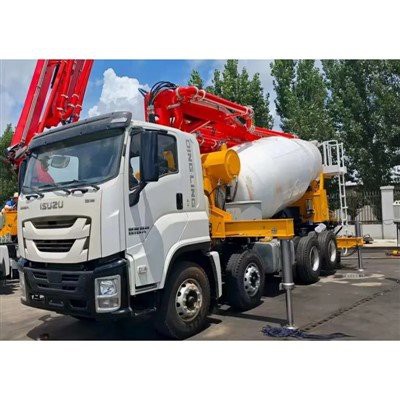
To discuss which truck-mounted concrete pump with the right hopper configuration fits your project needs, reach out to our team today for a personalized consultation. We’ll help you evaluate job requirements, output needs, and site constraints to find the perfect pump for your work.
Concrete Mixer Truck References
- American Concrete Institute (ACI). "Guide for Concrete Pumping." ACI 304R-20, 2021.
- Concrete Construction Magazine. "Hopper Design and Maintenance for Concrete Pumps." 2022.
- National Ready Mixed Concrete Association (NRMCA). "Concrete Handling and Placement Best Practices." 2020.
- Society of Manufacturing Engineers (SME). "Hydraulic Equipment for Concrete Construction." 2019.
Shandong Fuxin Automobile Technology Co., Ltd.
We’re well-known as one of the leading truck mounted concrete pump manufacturers and suppliers in China, featured by quality products and good price. Please rest assured to buy advanced truck mounted concrete pump made in China here from our factory. Contact us for more details.
Address: West of Nanshou Road, Beihai Road, Weifang City, Shandong Province
E-mail: h17616861003@gmail.com
WebSite: https://www.fuxinautomobile.com/
