If you’ve ever spent time around power generation, UPS systems, or industrial electrical testing, you know that a resistive load bank is one of the most reliable tools for verifying how well your equipment performs under real electrical demand. As a supplier of AC resistive load banks, I’ve seen firsthand that a successful installation hinges far more on having the right tools than on just the load bank unit itself. Cutting corners here doesn’t just slow down your project—it can lead to inaccurate test results, safety hazards, or even damage to your expensive power assets. In this post, I’ll walk through every tool you actually need, why each matters, and how we support our customers through every step of the installation process. AC Resistive Load Bank

First, let’s start with the tools you can’t install an AC resistive load bank without, even if you’re working with a portable, rack-mount, or skid-mounted unit. Let’s break them down by category, so you can check your list before you uncrated anything.
The first core category is electrical connection tools. The load bank itself only provides the resistive load (usually through heating elements that mimic the electrical draw of your actual equipment), but you have to connect it properly to the power source—and that requires specific tools. For most industrial or commercial setups, load banks use heavy-gauge power cables (often 4/0 AWG or larger for high-output models, which can handle 100 kW to 2 MW of power). To terminate these cables, you’ll need a hydraulic cable crimper, not a manual one. Manual crimpers can’t apply enough consistent pressure to large, thick-gauge cables, which leads to loose connections, overheating, and even fires. We always recommend our customers get a hydraulic crimper with interchangeable dies sized for their specific cable type—copper or aluminum, since load bank cables are usually one of the two. Alongside that, you’ll need cable cutters that can handle heavy-gauge wire. Regular wire cutters will bend or nick the cable’s strands, weakening it and creating resistance at the connection point. For extra safety, insulated cutting tools are non-negotiable here, even if you’re working on a de-energized line—you never know when a residual charge might be present.
Next, you need a proper tool for measuring cable size and insulation integrity. A cable measuring tape works, but a better investment is a wire gauge tester, which lets you confirm you’re using the correct size for your load bank’s rated current. Undersized cables will overheat during testing, which can trip breakers or damage your load bank’s internal components. An insulation resistance tester (megohmmeter) is also critical here. Before connecting the load bank, you need to verify that the power cables are free of insulation damage—any tear or wear can lead to short circuits. We include a basic megohmmeter with every new load bank we sell for exactly this reason, but many of our customers already have a more advanced unit for regular maintenance.
Moving from connection tools to the tools that ensure safe operation during installation. Once the cables are terminated, you need to prepare the connection point, which means tools for working in tight or high-voltage spaces. The most important here is a multimeter with true RMS capability. Basic multimeters can’t accurately measure AC voltage, especially when dealing with the distorted waveforms that generators or UPS systems can produce. A true RMS multimeter will give you accurate readings for voltage, current, and frequency, which is essential before you energize the load bank. We recommend a model with a clamp-on current probe, because you don’t have to break the circuit to measure current—this is a huge safety win for high-voltage setups. Alongside the multimeter, you’ll need a non-contact voltage tester. This tool lets you confirm that a circuit is de-energized before you start working, which is a non-negotiable for avoiding electrical shock. I’ve seen too many installers skip this step and accidentally work on a live line, leading to preventable injuries—always double-check with a non-contact tester, even if your breaker is labeled “off.”
Another safety tool that many people overlook is a torque wrench for tightening connection bolts. Load bank terminals are designed to be torqued to a specific value (usually around 150 to 200 ft-lbs for high-output units). Loose bolts can cause arcing, while overtightening can strip the terminal threads, leading to costly damage. A torque wrench ensures you hit the exact specification, which we list clearly in every load bank’s installation manual. For smaller rack-mount load banks (under 50 kW), a torque screwdriver works just as well, but never skip tightening to spec—this is one of the most common installation mistakes we help customers troubleshoot.
Now, what about tools for mounting and positioning the load bank itself? Portable and skid-mounted load banks are built to be moved, but even they need to be level and securely positioned to operate safely. For portable units, a set of heavy-duty casters is standard, but for permanent installations (like rack-mount load banks in a utility substation), you’ll need a level, structural mount. A spirit level (or a laser level for larger setups) ensures the load bank is perfectly level, which is important for its cooling system—load banks use built-in fans to dissipate heat from their resistive elements, and an uneven unit can cause the fans to work inefficiently, leading to overheating. For mounting, you’ll need heavy-duty bolts and anchors rated for the weight of your load bank—typical load banks weigh between 500 lbs (100 kW portable) and 10,000 lbs (2 MW skid-mounted), so your anchors need to support that static weight plus the vibration from the cooling fans. We include mounting hardware for all permanent installations, but if you’re working on a custom setup, a structural engineer’s input is always a good idea.
One tool that’s often forgotten but absolutely critical is a fire extinguisher rated for Class C electrical fires. Load banks generate a lot of heat during operation, and even with proper installation, there’s a small risk of overheating. Class C extinguishers are designed to put out electrical fires without conductive residue that can damage equipment. We always remind our customers to have at least two Class C extinguishers within arm’s reach during installation and testing—never use a water-based extinguisher on an electrical fire. For larger installations, some of our customers add a fire suppression system that’s integrated with the load bank, but that’s a separate upgrade we offer upon request.
Now, let’s talk about specialized tools that make the job faster and more accurate, especially for larger load bank setups. If you’re installing a 1 MW or higher load bank, a cable puller is a game-changer. Pulling heavy-gauge cables through conduit or along a wall by hand can take hours, and it’s physically taxing. A hydraulic cable puller reduces the time and effort, and it also prevents cable damage during installation. We often recommend this tool for customers working on large industrial or utility projects, and we can even connect you with rental services if you don’t want to purchase one outright.
Another specialized tool is a load bank controller tester. Most modern AC resistive load banks come with a digital controller that lets you set the load percentage, monitor temperature, and adjust settings. Before installing the controller, you can use a controller tester to verify that all the buttons, displays, and communication ports are working correctly, so you don’t have to tear apart the entire installation later to fix a faulty controller. We test every controller before it leaves our facility, but a quick pre-install test with a specialized tester saves a lot of headaches.
Now, let’s shift to the tools we provide as a supplier to make your installation even smoother. At our company, every load bank comes with a detailed installation manual, a full set of connection diagrams, and a customer support team that’s available 24/7 during installation. We also offer on-site installation support for customers who need hands-on help, and we can provide training for your team on how to operate and maintain the load bank. For customers who are new to AC resistive load banks, we even offer pre-install site assessments, where our technicians visit your location to check your power supply, clearance for the load bank, and other site-specific factors that could affect installation.
I want to be clear: cutting corners on tools doesn’t just lead to headaches—it can be dangerous. Last year, we worked with a customer who tried to install a 500 kW load bank with a manual crimper instead of a hydraulic one. The loose connections caused a small fire during testing, which damaged their load bank and took their generator offline for three days. That’s the kind of cost that far outweighs the price of the right tools. The right tools aren’t just an expense—they’re an investment in the safety and longevity of your equipment.
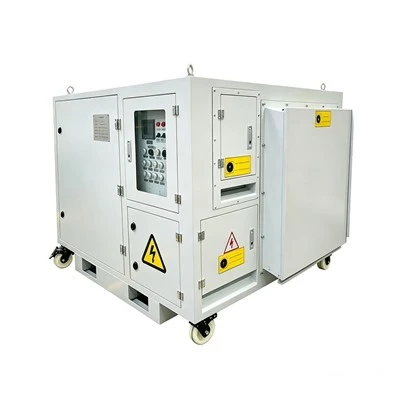
If you’re planning to install an AC resistive load bank, don’t leave anything to chance. Our team has installed hundreds of load banks across industrial, commercial, and utility sites, and we can help you pick the right tools for your specific setup. Whether you need to rent a cable puller, get a pre-install site assessment, or just verify that you have all the tools on your list, we’re here to help. Contact our team today to discuss your project and get the support you need to install your AC resistive load bank safely and correctly.
AC Resistive Reactive Load Bank References
- National Electrical Code (NEC), Article 620: Fixed and Variable Resistive Loads.
- Load Bank Installation and Operation Manual: ANSI/ISA-77.42.01-2018.
- Occupational Safety and Health Administration (OSHA), Electrical Safety Standards for High-Voltage Equipment.
- Copper Development Association, Guidelines for Terminating and Crimping Heavy-Gauge Power Cables.
- Resistive Load Bank Design and Testing Standards: International Electrotechnical Commission (IEC) 61557-1.
Hebei Kaixiang Electrical Technology Co., Ltd.
Hebei Kaixiang Electrical Technology Co., Ltd. is one of the most professional ac resistive load bank manufacturers and suppliers in China, featured by quality products and good price. Please rest assured to wholesale advanced ac resistive load bank for sale here and get quotation from our factory. We also accept customized orders.
Address: No79 Wangshan Road,Luquan District, Shijiazhuang, Hebei, China
E-mail: triumphload@kxload.com
WebSite: https://www.triumphload.com/
