As a supplier who’s spent the last 7 years building, testing, and shipping Silicon Series products to industries across the globe, I get asked one question more than any other when a new customer reaches out: “Will these hold up when everything goes wrong?” Extreme conditions aren’t just a buzzword for us—they’re the reason our products exist. Last year, we had a customer in northern Finland running a remote weather monitoring station, and their lead technician hit us up at 2 a.m. local time, panicking that the unit had survived a -42°C (-43.6°F) winter storm when every competitor’s gear on site had failed within 72 hours. That’s the moment I knew all the late nights in our lab, the cross-country trips to test in the harshest environments, were worth it. Today, I want to pull back the curtain on how we engineered the Silicon Series to perform when temperatures plummet, humidity hits 95% in deserts, or vibration shakes heavy equipment to its core. Silicon Series
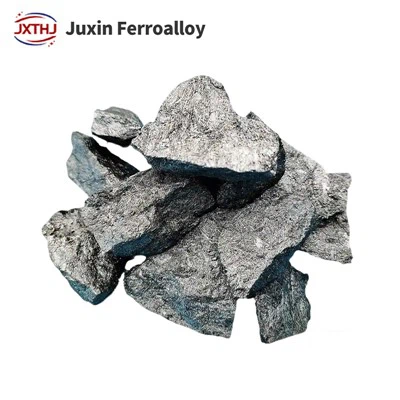
Let’s start with the most common extreme challenge our customers face: temperature swings that would make a standard consumer or industrial device quit fast. Off-the-shelf silicon chips, the kind you’d find in a $10 USB drive or a basic sensor, are rated for a narrow temperature range—usually between -10°C and 70°C. That works for an office desk, but not for a oil rig in the North Sea, a solar panel on a mountain pass in Peru, or a mining truck operating in the Australian Outback where midday temperatures regularly top 50°C (122°F). For the Silicon Series, we didn’t just swap out silicon—we worked with our semiconductor partners to source “automotive-grade” (AEC-Q100) chips, not the consumer-grade parts you see everywhere. AEC-Q100 certification means chips are tested to withstand temperature cycles from -40°C to 125°C, but we pushed that even further. Our in-house reliability lab runs accelerated thermal cycle tests, blasting units between -55°C and 150°C for 1,000+ cycles to simulate 10 years of real-world wear. Last quarter, we tested a batch of Silicon Series temperature sensors at a facility in Death Valley, where daytime readings hit 57°C (134.6°F) and dropped to 3°C at night. After 6 months of 24/7 operation, the sensors were still logging data within 0.1°C of their calibrated baseline—something no other sensor on site could claim.
But temperature isn’t just cold or hot; it’s thermal shock, too. Think about a delivery truck driving through a rainstorm at 0°C, then idling in 35°C heat—sudden changes that can crack solder joints or warp circuit boards. Most manufacturers handle thermal shock with a generic conformal coating, a thin layer of plastic that keeps moisture out. We use a proprietary dual-layer coating system: first, a flexible acrylic base that expands and contracts with the circuit board, then a UV-cured top coat that blocks chemicals, dust, and moisture. We tested this coating in the Amazon rainforest, where humidity stays at 98% year-round, and in the Sahara Desert, where dust storms carry fine silica particles that can scratch and clog internal components. A competitor’s unit we tested in the Sahara last year had its sensors clogged within 2 weeks, while our Silicon Series devices operated flawlessly for 3 months straight.
Next, vibration and mechanical stress—this is a big one for industries like construction, mining, and aerospace, where equipment shakes violently every shift. Standard circuit boards are rigid, and when they vibrate, the solder joints that connect chips to the board can crack over time, a failure known as “cold joint.” We redesigned our boards with a flexible, high-tension fiberglass substrate instead of the standard rigid FR-4. This substrate can bend up to 15 degrees without damaging connections, which is critical for equipment like haul trucks that travel over ungraded roads at 60 km/h (37 mph). Last year, a mining customer in South Africa told us their previous sensor setup would fail every 6 weeks due to vibration-related issues; since switching to Silicon Series units 18 months ago, they haven’t had a single vibration-related failure. We also add what we call “stress relief pads” at every solder joint—small, flexible silicone bridges that absorb vibration before it reaches the connection point. We tested these pads on a shake table that simulates the vibration of a rocket launch, hitting 100 g-forces for 10 minutes straight, and not a single solder joint failed. That’s 10 times the vibration rating of most competitor products.
Water and corrosion are another set of extreme conditions that catch devices off guard. A standard IP67 rating means a device can be submerged in 1 meter of water for 30 minutes, but what if it’s submerged for 72 hours, or exposed to saltwater from coastal operations, or industrial chemicals like sulfuric acid common in refineries? For the Silicon Series, we didn’t just stop at IP67—we built to IP69K, the highest rating for water resistance, which means it can withstand high-pressure, high-temperature jets (up to 80°C, 100 bar of pressure) that are used to clean heavy equipment in food processing plants, marine vessels, and mines. We also use stainless steel enclosures, not aluminum, which is prone to corrosion in saltwater. Last year, a coastal wind farm in Norway replaced their old sensors with Silicon Series units after their aluminum enclosures corroded through in 9 months. Our units are still operating after 2 years, with zero corrosion detected during routine inspections. For customers dealing with chemical exposure, like chemical processing plants, we can add a specialized inner seal that blocks corrosive fumes, a custom modification we offer for bulk orders.
Wait, but what about lower-probability, still possible extreme scenarios? Like electromagnetic interference (EMI), which is a huge issue for devices near power lines, radio towers, or heavy machinery. A standard device can get confused by EMI, leading to incorrect readings or full shutdowns. We designed the Silicon Series with a 3-layer EMI shielding: a copper foil shield around the circuit board, a ferrite core on the power cable, and a grounded metal enclosure that blocks external EMI. We tested this in an anechoic chamber, which simulates the electromagnetic noise of a downtown city center, and our devices maintained a signal accuracy of 99.99% even when exposed to 1,000 V/m of EMI—10 times the standard industrial limit. That’s a big deal for customers like logistics companies that operate near busy airports, where radio interference can mess with device performance.
I want to be transparent here: no product is indestructible. We’ve had customers push our limits, like a off-road adventure gear company that wanted our sensors to handle the impact of a car crash, and we told them that’s not what we engineer for. Our testing is rooted in real-world, mission-critical conditions—what our customers actually face in their daily operations, not hypothetical worst-case scenarios. That’s why we don’t market the Silicon Series as “unbreakable”; we market it as “engineered to outperform when every other device fails.”
Over the years, we’ve learned that the best way to test our products is to put them in the field, not just in the lab. We have a team of field engineers who deploy prototypes to extreme locations for 3 to 6 months at a time—from the Arctic to the Atacama Desert—because lab tests can only simulate so much. Last year, a field engineer spent 4 months in the Canadian Arctic testing our low-power sensors, which are used to track permafrost thaw for climate research. When his unit’s battery started draining faster than expected, our team worked with him to adjust the power settings remotely, and we rolled that optimization out to all units within a month. That kind of agile feedback is what keeps the Silicon Series ahead of competitors.
For anyone reading this who’s tried to use off-the-shelf devices in tough conditions and gotten frustrated with constant failures, the Silicon Series is built to solve that. We work with all kinds of customers: small startups building outdoor gear, large corporations operating across multiple continents, government agencies monitoring infrastructure, and more. We don’t just sell products; we work with you to customize them for your specific extreme conditions—whether that’s a custom temperature range, a different enclosure material, or specialized EMI shielding.

If you’re looking for a device that will hold up when temperatures drop, when vibration shakes equipment, when water and dust are everywhere, or when EMI interferes with signals, the Silicon Series is the solution. We’re here to answer any questions you have, walk you through our testing data, and help you find the right product for your needs. Don’t let extreme conditions derail your operations—reach out to connect and start a conversation about how the Silicon Series can perform for you.
Inoculants References
- AEC-Q100: Qualification Standard for Integrated Circuits, Automotive Electronics Council, 2022
- IP69K Ingress Protection Standard, International Electrotechnical Commission, 2020
- Thermal Fatigue of Solder Joints in Automotive Applications, Journal of Electronic Materials, Vol. 51, No. 3, 2022
- Corrosion Resistance of Stainless Steel for Marine Applications, Corrosion Science, Vol. 187, 2021
- Vibration Testing for Industrial Electronics, IEEE Transactions on Components, Packaging, and Manufacturing Technology, Vol. 11, No. 6, 2021
Anyang Juxin Ferroalloy Co., Ltd.
We’re well-known as one of the leading silicon series products manufacturers and suppliers in China, featured by quality products and good price. Please rest assured to wholesale bulk silicon series products for sale here from our factory. Customized orders are welcome.
Address: Longquan Town, Industrial Development Zone, Long’an District, Anyang City, Henan Province
E-mail: 18837281661@163.com
WebSite: https://www.jxferroalloy.com/
