Hey there, folks. If you’re in industrial automation, manufacturing, or any space that runs on Industrial Ethernet, you know how much a wonky cable can derail your whole operation. I’m from an Industrial Ethernet cable supplier (no need for a fancy brand name here—you know who we are when you need that reliable cable for your line), and I’ve spent years troubleshooting exactly these kinds of issues for our clients. Today, I’m walking you through the real, hands-on stuff—no jargon overload, just what actually works when your network starts acting up. Industrial Ethernet Cable
First off, let’s get one thing straight: industrial Ethernet isn’t your home Wi-Fi. It’s built to handle dirt, vibration, temp swings, and all that factory chaos, but even the toughest cables can slip up. When your SCADA system is glitching, your PLC is timing out, or your machine vision feed is freezing, the first thing most people skip is checking the cable. They jump to routers, switches, or software, but 60% of the time (I’ve seen the stats from our tech support team) it’s a simple cable issue. Let’s break this down step by step, like we’re on the factory floor right now.
Start with the obvious—physical inspection, but not just a quick glance. I see guys walk by a cable that’s crimped between a conveyor and a bracket, mutter “that looks fine,” and move on. Nah, get on your knees. Check for kinks, fraying, or cuts in the jacket. Industrial cables have a thick outer sheath, but if it’s cracked, moisture (especially if you’re in a food and beverage plant or outdoor setup) can seep in and mess with the signal. Also, look for where the cable bends. A sharp bend at the connector end is a killer—even if the jacket looks intact, the internal wires might be twisted or broken. Pro tip: if the cable’s been bent tighter than the manufacturer’s minimum bend radius (that info’s in the spec sheet, we send it free with every order), it’s a red flag. We always tell clients to mark those high-bend areas to avoid accidental crunches.
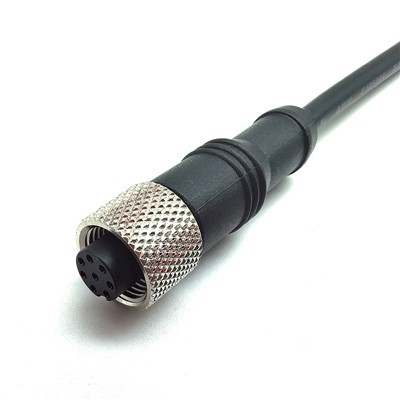
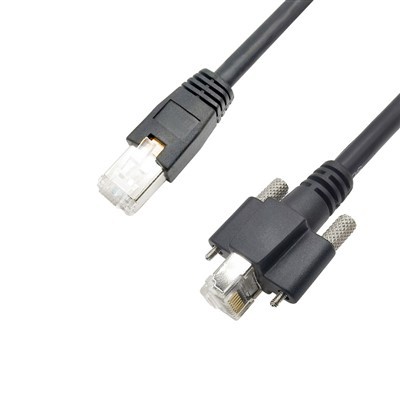
Next, check the connectors. This is the second most common culprit. Industrial Ethernet uses different connectors—RJ45 is common, but M12 and M8 are super popular for harsh environments because they’re screwed down, not just clipped like home network plugs. Loose connections cause signal dropouts all the time. Grab a small wrench (or your fingers, if it’s an M12) and make sure the connector is tight. Don’t over-tighten, though—you’ll crack the plastic housing or strip the threads. Also, look for corrosion on the pins. If you see rust, dust caked on, or bent pins, that’s a problem. In steel mills or sawmills, metal shavings get everywhere, and they can short out the pins. For M12 connectors, if the pins are bent, a lot of folks try to straighten them with a tiny screwdriver, but I’d recommend replacing the connector. Cheap fixes here usually lead to more headaches later.
If the physical stuff looks good, move on to testing the cable with a tool. You don’t need a $10,000 tester—we recommend a basic cable tester that checks for continuity, wire map, and signal strength. A lot of clients ask, “Do I really need that?” Let me tell you: I once had a plant where their network kept dropping packets, and the tester showed two crossed wires that were hidden inside the jacket. We couldn’t see them just by looking. Continuity is key—if one of the eight wires in the Ethernet cable is broken, the signal can’t pass. The wire map test will tell you if the pins are in the right order (sometimes during installation, electricians mix up the T568A and T568B standards, which kills Gigabit Ethernet). If you’re dealing with longer runs (over 100 meters, which is the limit for standard Ethernet), a basic tester can also spot signal attenuation— that’s when the signal gets weak the farther it travels, which is super common in industrial setups with cable runs between machines.
Speaking of long runs: industrial environments have a lot of electromagnetic interference (EMI). That’s a big one. If your cable is running next to a power cable (like 480V motors or welders), EMI can cause your Ethernet signal to degrade. How do you check? If your network acts up when a specific machine turns on, that’s probably EMI. The fix here isn’t always troubleshooting the existing cable—sometimes you just need to re-route the Ethernet cable at least 30cm away from power lines, or switch to a shielded cable (we sell a ton of shielded Industrial Ethernet cables for exactly this reason). UTP (unshielded twisted pair) is cheap, but it’s no match for EMI in a busy factory. STP (shielded twisted pair) or fiber optic cables are better here, and fiber is even more foolproof because it doesn’t carry electrical signals at all—so no EMI issues.
Wait, what about if you’re using a fiber cable? A lot of industrial plants are switching to fiber because it’s longer-range and more reliable, but fiber has its own issues. The most common one is dirty connectors. A tiny speck of dust on the fiber end can block the signal entirely. You can’t just wipe fiber connectors with a regular cloth—you need a fiber cleaning pen (we keep these in our tool kits for clients) or isopropyl alcohol on a lint-free wipe. Also, check for crimps in the fiber cable—those break the glass inside, so the signal can’t travel. If your fiber link is down, start with the connectors, not the cable itself.
Another thing: temperature and environment. Industrial cables aren’t made for the same temps as home stuff. If you’re working in a freezer (like a food distribution center) or a foundry where temps get way over 100°F, standard Ethernet cable will break down over time. We sell low-temperature and high-temperature industrial cables for exactly these spaces. I’ve seen a client in a cold storage warehouse have their network go down every winter because they used a regular cable that became brittle and cracked. Switching to our low-temp cable fixed that immediately. Also, if you’re outside, make sure your cable is UV-resistant. Sunlight breaks down the outer jacket of regular cables, so they get brittle and crack within a year. We have outdoor-rated cables that hold up for 5+ years in direct sun.
Let’s talk about installation mistakes, because that’s where a lot of issues start. Electricians who are used to home wiring often treat industrial Ethernet the same way, but that’s wrong. For example, pulling cable too tight—if you yank an Ethernet cable during installation, you can break the internal wires even if the jacket looks fine. We tell installers to use cable lugs and not pull by the jacket. Also, stapling Ethernet cables to metal studs? That’s a no-go. The sharp edge of the stud can cut through the jacket over time. Use cable clamps instead, and leave a little slack at connectors so there’s no tension on the plug.
What if you’ve checked all that, and it’s still not working? Let’s do a swap test. If you have a spare cable lying around (we always recommend clients keep a few spares on hand), swap out the suspect cable with a known good one. If the network works now, you know the original cable is bad. That’s a quick fix, and it saves you from tearing apart the whole wall to run a new cable. We always tell new clients to stock 10% spares of their cable type—small cost compared to a production shutdown.
Now, let’s talk about what not to do. Don’t use a home Ethernet cable in an industrial setting. I see this all the time—guys grab a Cat6 from their home office and plug it in, and it dies in a week. Home cables aren’t rated for vibration, temp, or EMI. Don’t ignore the small issues. If you see a little fray on the cable, fix it now instead of waiting for it to break mid-production. A 5-minute repair is way cheaper than a 2-hour shutdown. And don’t try to splice industrial cables yourself. Splicing requires special tools, and if you do it wrong, the signal will be weak. Send it to a professional, or buy a pre-spliced cable from us—we do that all the time for clients who don’t have the gear.
Wait, let’s throw in a real example to make this concrete. Last quarter, we had a client in automotive manufacturing calling us panicking. Their assembly line robot was timing out every 10 minutes, stopping the line for 5 minutes each time—costing them $12,000 an hour. Our tech support team walked them through the steps: first, check the cable between the robot’s controller and the switch. They found the M12 connector was loose, so they tightened it. No fix. Then, they inspected the cable and found a kink at the point where it went over a conveyor. The kink had broken one internal wire. They swapped in a spare cable we had on site, and the line ran for 3 weeks without a glitch. That’s exactly the kind of thing we deal with every day.
Another example: a wind farm client had issues with their turbine monitoring network. The cables are outside, exposed to sun and wind. Their problem was EMI from the turbine’s generator, so their UTP cable kept dropping packets. We recommended they switch to shielded STP cables, and within a week, the issues were gone. Shielding blocks the EMI, and the outdoor-rated jacket held up to the elements.
So, wrapping this up: troubleshooting industrial Ethernet cables isn’t rocket science, but it does require paying attention to the details that make industrial cables different from home ones. Start with physical checks, connectors, then test the cable, watch for EMI and environment, fix installation mistakes, and don’t be afraid to swap in a spare.
If you’re dealing with recurring cable issues, or you need the right Industrial Ethernet cable for your setup, reach out to us. We’ve got the specs, the spares, and the team to help you get your network running smoothly. Don’t let a bad cable shut down your operation—let’s connect and find the right solution for your needs.
CoaXPress Cable References
- Industrial Ethernet Alliance. (2022). Troubleshooting Guide for Harsh Environment Ethernet Cables.
- Rockwell Automation. (2021). Best Practices for Industrial Cable Installation.
- National Electrical Manufacturers Association (NEMA). (2020). Standards for Shielded Ethernet Cables in Industrial Applications.
- TE Connectivity. (2023. Connector Reliability in Vibration-Intensive Industrial Environments).
Karobert Technology LLC Karobert Trading PTE. LTD.
We’re known as one of the most professional industrial ethernet cable manufacturers and suppliers in China, also support customized service. Please feel free to buy high quality industrial ethernet cable made in China here from our factory. For price consultation, contact us.
Address: 6250 S 196th St, Kent, WA, 98055, USA.
E-mail: karl@karobert-us.com
WebSite: https://www.karobert-us.com/
