If you’ve ever walked into a grocery store and seen a wall of clean, uniform eggs stacked in color-coded cartons, there’s a good chance an egg grading machine with packaging did the heavy lifting behind that display. As a supplier who’s worked with small-scale egg farmers and large commercial operations for over 12 years, I’ve heard plenty of questions from people just starting out: “What even is that machine? Why can’t I just pack eggs by hand?” The short answer is simple: it’s a system that sorts, cleans, grades, and packages eggs at a speed and accuracy no human can match, but there’s way more to it than that. Let’s break it down, straight from someone who builds, installs, and troubleshoots these machines every day. Egg Grading Machine
First, let’s start with what egg grading means, because that’s the core of the process. Grading isn’t just picking out the pretty brown eggs from the cracked ones—it’s a standardized process that checks multiple quality markers regulators like the USDA or EFSA require for sale. Back in the 1980s, most farmers sorted eggs by hand: a worker would candle each egg (hold it up to a light to check for yolk position, air cell size, and shell integrity), weigh it, and load it into cartons. But as egg production scaled, that method became slow, inconsistent, and hard to keep food safety standards up to. An egg grading machine with packaging replaces that manual work with automated, precise steps that are repeatable every single time.
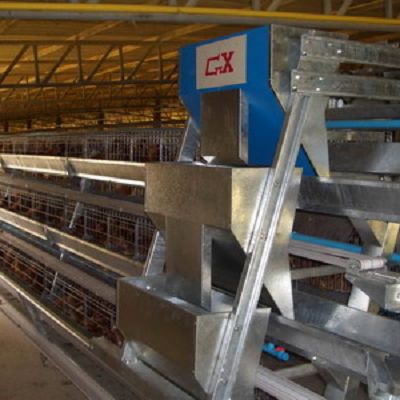
Let’s walk through a typical machine’s workflow, step by step, to make it concrete. First, eggs come off the production line, usually laid by hens in battery cages or free-range systems, and are moved into the machine via a conveyor belt or batch tray. The first stop is a pre-wash station—this isn’t just a quick rinse. The machine uses food-grade, pH-balanced detergent and soft, rotating brush heads to remove manure, feed, or dust from the shells, then rinses with warm water (around 100 to 110 degrees Fahrenheit, per food safety guidelines) and blows them dry with a gentle air system. If a human were washing eggs, they might miss tiny dirt spots or scrub too hard and crack a shell; the machine’s pressure is calibrated to do both jobs consistently.
Next, the candling station, which is where the machine really starts grading quality. Unlike a human holding an egg up to a flashlight, the machine uses high-resolution cameras and LED lights to scan each egg as it moves through a dark tunnel. The camera captures a full image of the shell to check for cracks, blood spots, or shell discoloration—any egg with a flaw gets automatically rejected and routed to a separate bin for disposal or further processing. For the interior quality, the candling light shines through the shell to measure the size of the air cell: a large air cell means an older egg, which doesn’t meet grade standards. The machine also checks the yolk’s position, which relates to freshness—if the yolk is too close to the shell, that egg is too old to grade for retail sale.
Then comes weighing, which is how eggs get sorted into size classes. The USDA, for example, defines size classes like Small (1.5 ounces per egg), Medium (1.75 ounces), Large (2 ounces), Extra Large (2.25 ounces), and Jumbo (2.5 ounces). A human can only hold so many eggs at once and can’t weigh each to the tenth of an ounce consistently, but the machine uses high-precision load cells under each egg’s cradle to weigh them in real time. As each egg is weighed, it’s routed to the correct size bin—so all Medium eggs go one way, Large another, with zero mix-ups. This is a huge win for farmers: before these machines, a farmer might have to sell off mismatched eggs for a lower price, but sorting by size lets them sell every egg at the right market rate.
After grading and weighing, the packaging step happens. This is where the eggs get loaded into cartons, either standard plastic or paper, or even custom trays for specialty products like organic or free-range eggs. The machine aligns the eggs perfectly, so each egg sits in its own cavity without pressing against neighbors—cracked eggs during packaging are a top complaint for retailers, and the machine’s precision cuts that number by 90% compared to hand packing. Some machines even add extra features here, like printing an expiration date, farm ID, or nutrition info directly on the carton, so retailers don’t have to handle that step separately.
Now, not all egg grading machines with packaging are the same, and that’s where a good supplier like me comes in. We don’t sell a one-size-fits-all model; we build machines for every scale of operation. For a small family farm that produces 500 eggs a day, a compact, semi-automated machine might be all they need. That model works at a speed of 30 eggs per minute, handles up to 10,000 eggs a week, and is easy to operate with just one part-time employee. It can sort for quality, weight, and size, and package into standard dozen or half-dozen cartons. For a large commercial operation that produces 50,000 eggs an hour, we build fully automated lines that integrate with existing barn systems, can track individual egg origins, and even handle specialty packaging like cage-free cartons or liquid egg bulk containers.
One common mistake new operators make is thinking a more expensive machine is always better. I worked with a farmer in Iowa last year who bought a high-end commercial machine for his small 1,000-hen operation, and within six months, he was frustrated because it was too complex to clean, took up half his barn space, and cost way more to operate than a compact model tailored to his size. We ended up swapping it for a smaller semi-automated system, and within a year, he saw a 22% increase in profit because he was able to sell every egg at the right grade without the extra overhead. That’s why, when someone reaches out to me, I always ask a few key questions first: how many eggs do you produce a week? Do you need to sell to local retailers, grocery chains, or direct to consumers? What’s your budget for equipment and maintenance?
Food safety is another big part of what these machines do, beyond the basic washing and candling. In recent years, regulators have gotten way stricter about salmonella and other foodborne pathogens in eggs, and manual grading is way more likely to spread contamination—if a worker touches a dirty egg and then a clean one, they can transfer bacteria. Our machines are built with food-safe materials, easy-to-disassemble parts for deep cleaning, and touchless conveyor systems that eliminate direct human contact. That’s not just helpful for passing inspections; it’s a selling point for retailers and consumers, who are increasingly looking for eggs processed with minimal human handling.
I also want to talk about the less obvious benefits that come with an egg grading machine with packaging. For example, data tracking. Most modern machines log every egg’s grade, size, and weight, and can even track trends over time—like if a batch of eggs is smaller than usual, that might indicate a hen health issue or a problem with feed. For farmers, that data is gold: it lets them adjust their operations quickly, reduce waste, and improve hen welfare. Last year, a customer in Ohio used his machine’s data to notice that his eggs were coming out with larger air cells in the summer, which led him to adjust the barn’s temperature and humidity, cutting the number of below-grade eggs by 15%. That’s the kind of insight no manual process can give you.
Of course, machines aren’t perfect, which is why supplier support matters. I’ve been in the industry long enough to know that even the best machines can have issues—like a camera getting smudged, or a conveyor belt jamming. That’s why we offer on-site training for every operator, 24/7 technical support, and regular maintenance checks. I still remember a customer in Texas who had a machine go down the night before a big holiday order; I hopped on a plane at 6 a.m. and was on his farm by noon, fixed it in two hours, and made sure he met his delivery deadline. That’s the kind of service you can’t get from a generic online supplier.
Now, let’s address a question a lot of people have: is an egg grading machine with packaging worth the investment? It’s a fair question, because these machines aren’t cheap—small models start around $15,000, and commercial models can run six figures. But the math adds up fast. Let’s say a small farmer can sort eggs by hand for $0.05 per egg, but a machine sorts them for $0.01 per egg, and reduces the number of below-grade eggs by 10%. For 10,000 eggs a week, that’s a $400 savings every month, and a higher percentage of eggs that can be sold at retail prices instead of discounted. For larger operations, the savings are even bigger: a 50,000-egg-per-hour line cuts labor costs by 5 to 10 full-time workers, which is easily enough to pay off the machine in two or three years.
I’ve also seen how these machines help small farms compete with large industrial operations. Ten years ago, a small family farm in my area couldn’t get their eggs into local grocery stores because they couldn’t match the consistency and sorting that big producers offered. Now, with a compact grading machine, they can produce the same uniform, grade-A eggs as a large farm, and sell directly to the same stores. That’s what makes this work personal for me: I grew up on a 40-hen farm in Michigan, and I know how hard it is to make a living when you’re competing with big operations. These machines level the playing field, in a way.
If you’re a farmer looking to upgrade your egg processing, or a new producer just getting started, the first step is to figure out your specific needs. Do you need a machine that works with your existing barn setup? Do you need to package for local farmers markets or regional grocery chains? Are you comfortable with semi-automated machines, or do you want a fully integrated line? There’s no one right answer, which is why taking the time to talk to someone who knows the industry is key.
At the end of the day, an egg grading machine with packaging isn’t just a piece of equipment—it’s a tool that lets farmers produce safer, higher-quality eggs, reduce waste, and grow their businesses. It’s the quiet workhorse that turns a pile of fresh eggs into the neat, cartoned dozen you grab from the dairy aisle every week. If you’re ready to learn more about which machine is right for your operation, or want to walk through your specific needs, feel free to reach out to discuss your requirements. For more information, you can also connect to explore options tailored to your farm size and production goals.
Egg Grading Machine References
- United States Department of Agriculture (USDA). (2022). Egg Grading and Quality Standards. USDA Agricultural Marketing Service.
- European Food Safety Authority (EFSA). (2021). Salmonella Control in Egg Production and Processing. EFSA Journal.
- Egg Industry Council. (2023). Automated Egg Processing Technology: Benefits for Small and Medium Producers. Egg Industry Research Report.
- Food and Agriculture Organization (FAO). (2022). Reducing Food Waste in Small-Scale Egg Production. FAO Animal Production and Health Division.
Guangzhou Guangxing Poultry Equipment Group Co., Ltd.
Guangzhou Guangxing Poultry Equipment Group Co., Ltd. is one of the most professional egg grading machine manufacturers and suppliers in China, featured by quality products and good price. Welcome to buy CE approved egg grading machine made in China here and get pricelist from our factory. Customized orders are welcome.
Address: NO.2 Guangxing Road, Shating Taihe Town, Baiyun Guangzhou, China
E-mail: gxservice@cnguangxing.com
WebSite: https://www.guangxingcn.com/
